

PT-141 | 20mg | 3ml
PT‑141 (also known as bremelanotide) is a synthetic cyclic heptapeptide melanocortin‑receptor agonist derived structurally from Melanotan II. It is produced by modifying the C‑terminus of the MT‑II scaffold — replacing the terminal amide with a hydroxyl group — yielding a related cyclic peptide with a distinct receptor‑selectivity profile while retaining the lactam‑bridged, enzymatically stable architecture of its parent compound. These properties make PT‑141 a well‑defined reference peptide for studying melanocortin signalling under controlled laboratory conditions.\n\nIn biochemical and cellular research systems, PT‑141 acts as an agonist at the centrally expressed melanocortin receptors MC3R and MC4R, with comparatively higher potency at MC4R and substantially reduced activity at MC1R relative to Melanotan II. This shift toward MC4R selectivity makes PT‑141 a useful tool for isolating MC4R‑mediated signalling — including G‑protein‑coupled cAMP and phospholipase‑C cascades, intracellular calcium flux, and ERK/MAPK pathway activation — within neuronal and receptor‑expressing model systems. The molecular responses observed vary with receptor subtype, concentration, exposure time, and experimental model, and PT‑141 is used to characterise melanocortin‑receptor signalling rather than to infer defined biological or physiological outcomes.
Strength
20mg
Concentration
6.67 mg/ml
Purity
≥99% HPLC
COA
Included
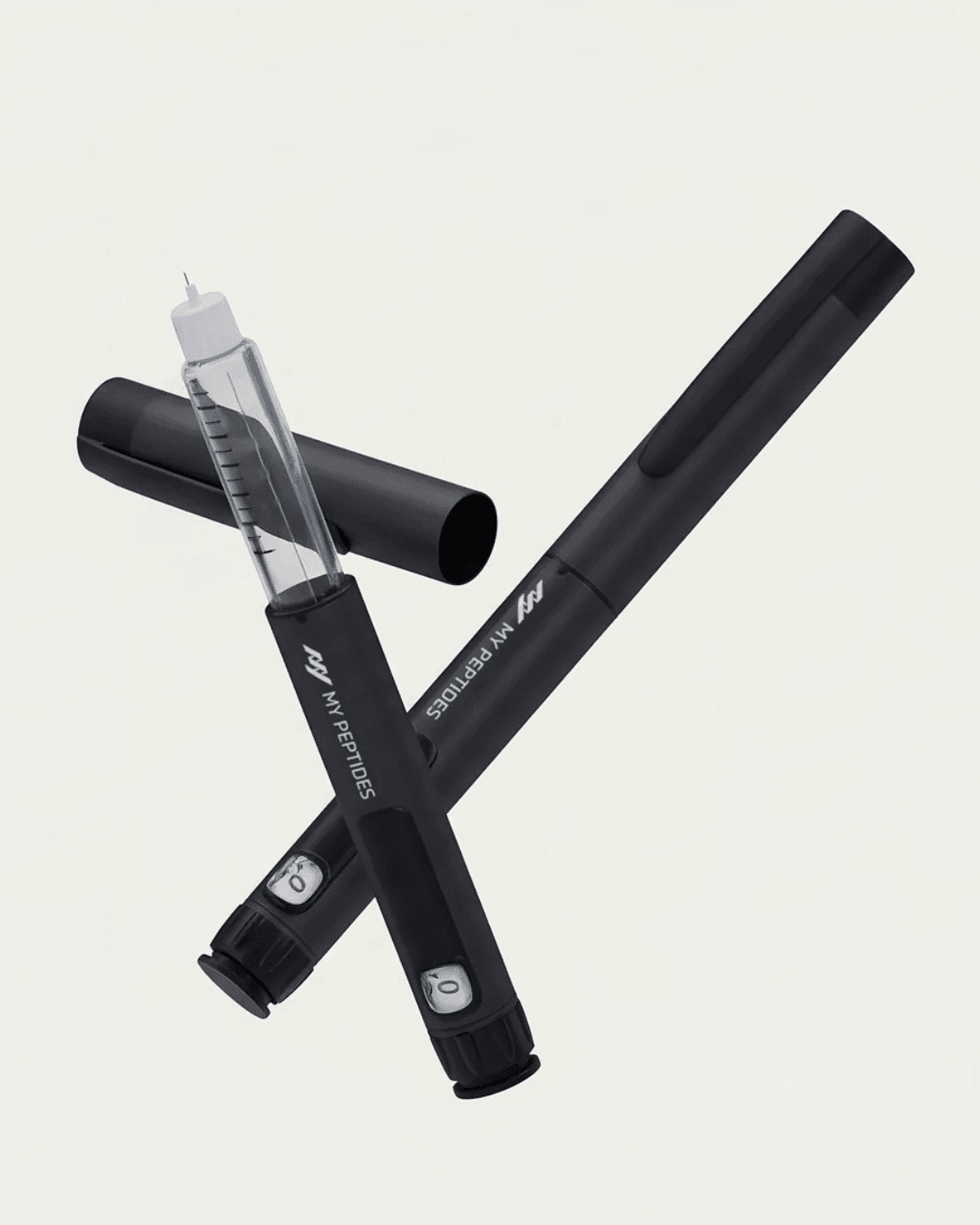
Free Reusable auto-injector pen, worth $50
A reusable pen is added free to your order, automatically.
- Same-day dispatch on orders placed before the daily cut-off.
- Free shipping over $100, tracked.
- Cold-chain packed: sealed foil pouch, ice packs, plain outer box.
- Batch-specific Certificate of Analysis included.
| Designation | Cyclic melanocortin heptapeptide (bremelanotide) |
| CAS Number | 189691-06-3 |
| Molecular Formula | C₅₀H₆₈N₁₄O₁₀ |
| Molecular Weight | 1025.2 g/mol |
| Sequence | Ac-Nle-cyclo[Asp-His-D-Phe-Arg-Trp-Lys]-OH |
| Strength | 20mg |
| Concentration | 6.67 mg/ml |
| Presentation | 3ml Vial , Pen and Needles |
| Purity | ≥99% (HPLC) |
| Storage | Must be kept in a refrigerator at 2°C–8°C for optimal potency. |
| Certificate of Analysis | Batch-specific COA included |
How we ship it
Every pre-mixed vial ships cold from the warehouse serving your region and arrives in a plain box. Refrigerate on arrival at 2–8 °C.
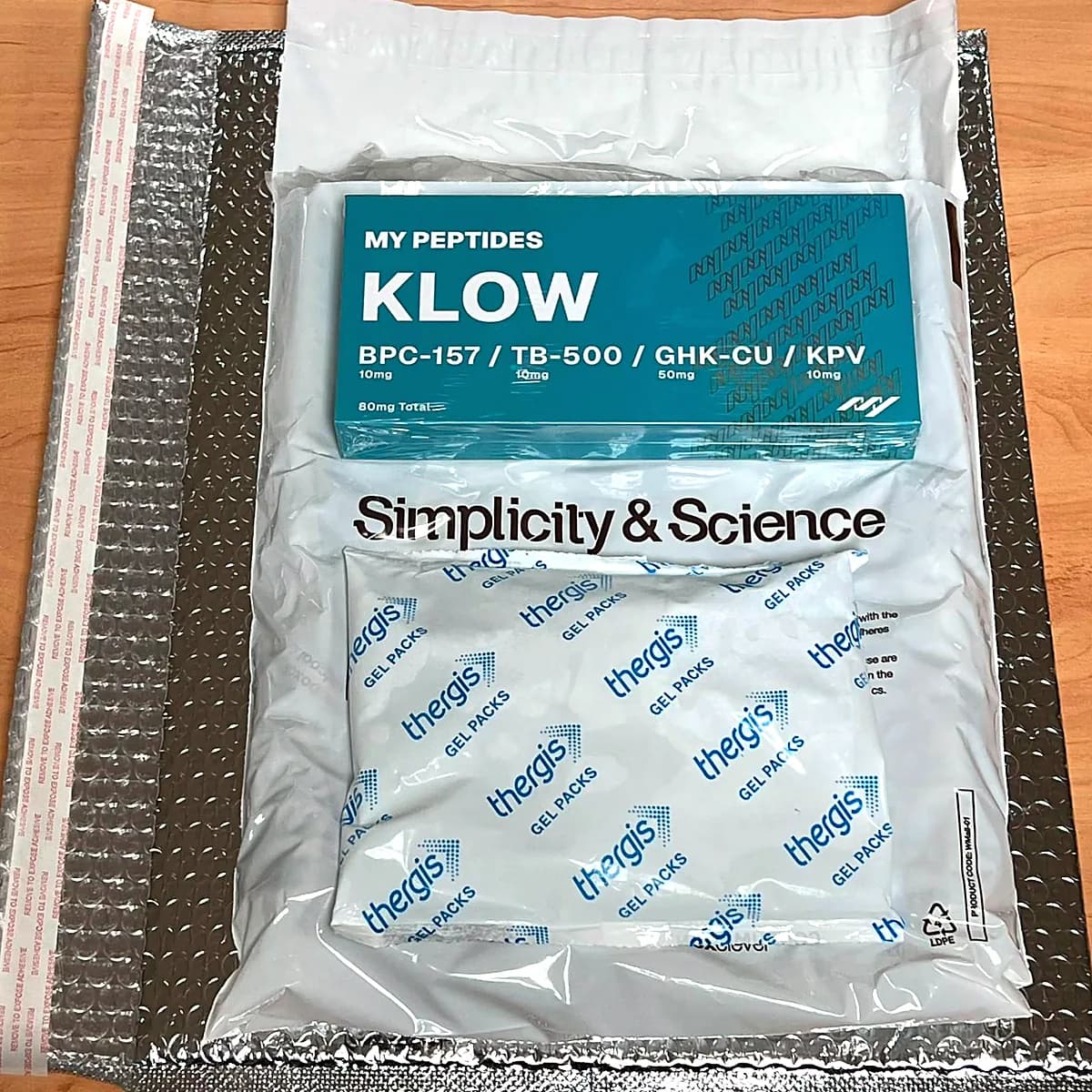
Chilled
Vials travel with frozen gel packs inside a sealed foil pouch, which holds temperature for roughly seven days — far longer than the journey needs, so the cold chain has room to spare.
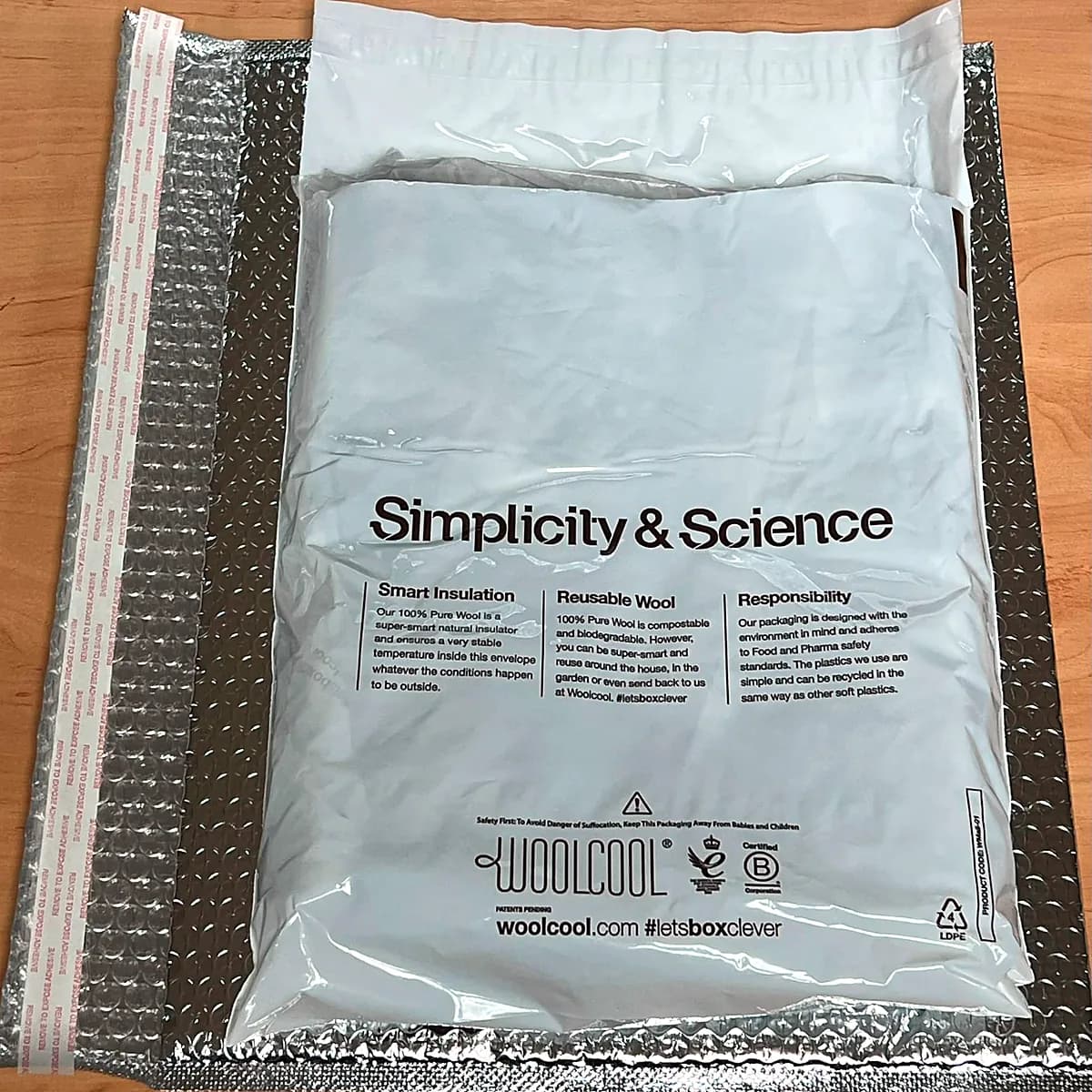
Insulated
The pouch sits inside a wool-lined envelope, so the cold chain survives a normal courier journey.
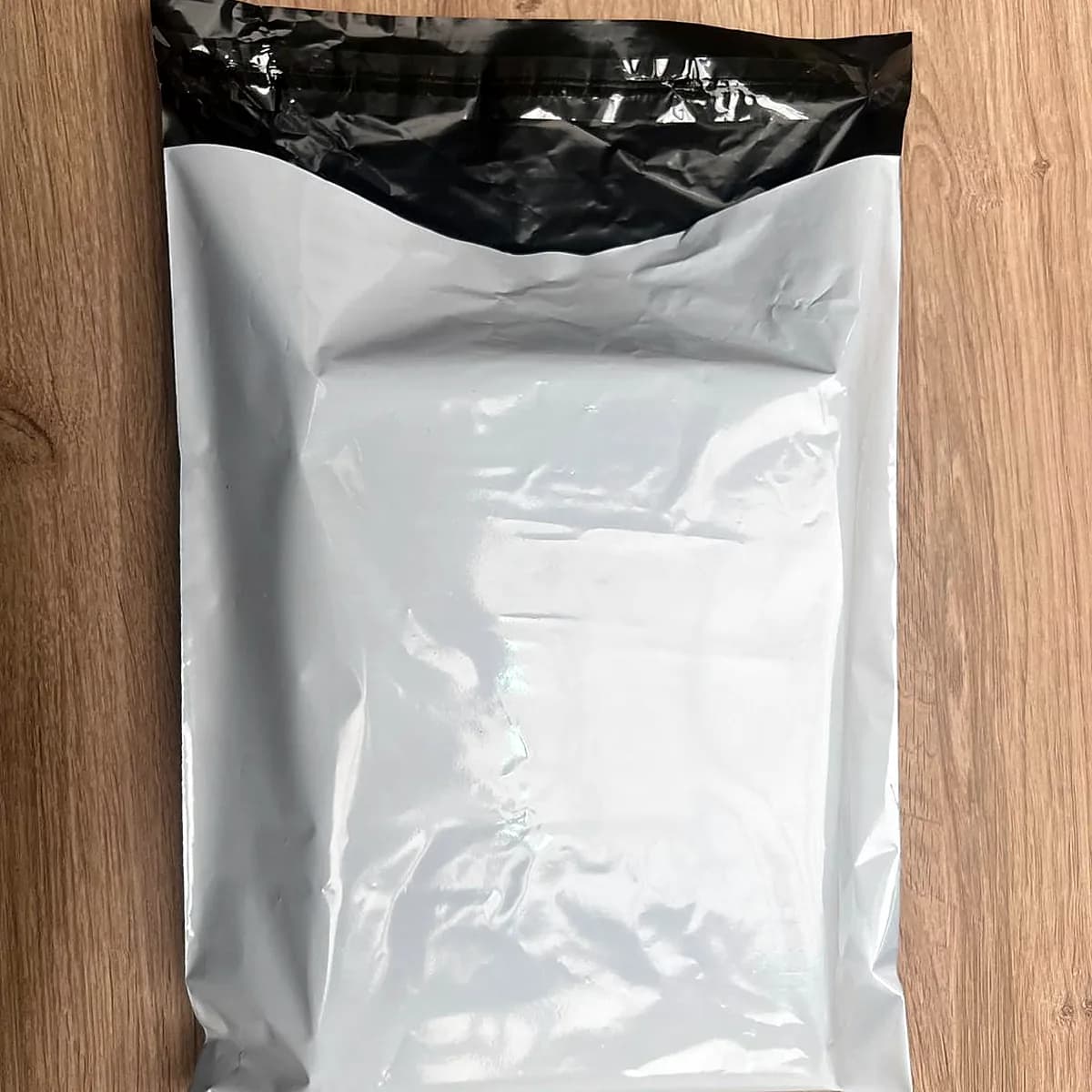
Discreet
Plain outer box with no branding and nothing on the label that names the contents.
Same-day dispatch
Order before the daily cut-off, Monday to Friday.
Free over $100
Tracked, next business day.
2–8 °C on arrival
Refrigerate as soon as the parcel lands.
PT-141
$200.00 · Qty 1
PT-141 (bremelanotide): structure, format and buying criteria for US research laboratories
PT-141 (bremelanotide) is a synthetic seven-residue peptide closed into a macrocycle by a side-chain lactam bridge, supplied here as a pre-mixed solution in a 20mg vial for in-vitro laboratory research.
${RUO_NOTE}
Two things about this listing differ from a lyophilized vial of the same compound: the material arrives already in solution, and the molecule sits one small chemical edit away from a close structural relative, which makes identity verification less trivial than it first appears. Both are worth understanding before you compare suppliers.
Structural identity
| Field | Value |
|---|---|
| Common name | PT-141 |
| Synonym | Bremelanotide |
| Class | Synthetic cyclic heptapeptide; melanocortin-receptor agonist |
| CAS | 189691-06-3 |
| Molecular formula | C50H68N14O10 |
| Average molecular mass | ~1025.2 g/mol |
| Sequence | Ac-Nle-cyclo(Asp-His-D-Phe-Arg-Trp-Lys)-OH |
| Ring | Side-chain lactam, Asp to Lys |
| Format supplied | Pre-mixed solution, 20mg vial |
| Documentation | Certificate of Analysis — see /coa |
A single terminal group separates it from the parent scaffold
PT-141 is built on the same cyclic backbone as Melanotan II, its structural parent and, for the purposes of this page, nothing more. The distinguishing edit sits at the C-terminus: where the parent carries a primary carboxamide, PT-141 carries a free carboxylic acid — a nitrogen-for-oxygen exchange with the loss of a hydrogen. That is the whole structural difference, and it has three analytical consequences a receiving lab should care about.
Mass. Swapping an amide for an acid changes the average mass by roughly one dalton — about 1025.2 for PT-141 against about 1024.2 for the amide form. On a low-resolution instrument, or on a report quoting mass only to the nearest unit, those two isotope envelopes overlap badly. A COA line reading "MS confirms ~1025" is not, on its own, a confirmation of identity. Ask for theoretical and observed masses printed side by side, at resolution sufficient to separate them.
Charge. The free acid is deprotonated at neutral pH, so the molecule carries one more negative charge than the amide form. That shows up in ion-exchange behavior and in the isoelectric point, and typically shifts retention slightly under identical reversed-phase conditions. Retention time alone is weak evidence; retention time against a reference standard run in the same sequence is much stronger.
Ring integrity. The lactam is formed by condensing the aspartate side-chain carboxyl with the lysine side-chain amine, so the cyclic peptide is 18 daltons lighter than its linear precursor. Uncyclized linear material is the impurity to look for, visible both as a distinct chromatographic peak and as a +18 mass; cyclodimers appear at approximately twice the monomer mass. Separately, the phenylalanine residue is in the D-configuration, and epimerization to the L-configuration produces a diastereomer of identical mass that mass spectrometry cannot resolve at all. Only chromatography, or dedicated chiral analysis, separates it — the single strongest argument for insisting on a full chromatogram rather than a summary purity number.
Receptor selectivity as a research subject
The melanocortin family comprises five G-protein-coupled receptors, MC1R through MC5R. Published work on melanocortin ligands is a body of in-vitro and animal laboratory research under examination, and this page draws no conclusions from it. The methodological point is the transferable one: in-vitro reports of how a ligand distributes its binding affinity across those subtypes depend heavily on assay format, cell line, receptor expression level and readout, and the values are not portable between systems. Treat subtype numbers as properties of a particular assay, not of the molecule in the abstract.
Pre-mixed solution against lyophilized powder
| Consideration | Lyophilized vial | Pre-mixed solution |
|---|---|---|
| Preparation at the bench | Requires reconstitution and a diluent decision per lab | Arrives ready as supplied |
| Sources of variance | Weighing, transfer and reconstitution error sit with the buyer | Fixed at fill; consistent across draws from one vial |
| Shelf stability | Generally the more robust long-term form | Shorter practical life; degradation pathways stay active |
| Moisture and stopper entry | Repeated entry admits moisture into dry cake | Not applicable, but headspace and septum integrity matter |
| Transit sensitivity | Tolerant of ambient excursions | Temperature and light exposure in transit are real variables |
| Freeze–thaw | Not a factor before reconstitution | Repeated cycling is the main avoidable stressor |
| Surface adsorption | Begins only after reconstitution | Ongoing from fill onward; container chemistry matters |
Neither format is universally better. The trade is that a solution removes a step where a lab introduces its own error, and accepts in exchange a shorter stability window and real sensitivity to how the package travelled. Ask any overseas supplier what packaging and temperature control it uses, and inspect on arrival.
What a Certificate of Analysis should contain
Documentation for this catalogue is published at /coa. Whoever you buy from, a COA is only worth reading if it carries all of the following.
- A lot or batch number matching the vial in your hand, plus an analysis date. A document with no lot linkage is a marketing asset, not a record.
- A reversed-phase HPLC chromatogram, not just a percentage. Note the detection wavelength: 214 nm reports the peptide bond and sees far more than 280 nm, which reports only aromatic residues.
- Purity stated with its definition: area percent, at which wavelength, integrated over what window.
- Mass confirmation with theoretical and observed values, and enough resolution to be meaningful given the one-dalton issue above.
- The identity of the testing laboratory. An unnamed lab, or one document reused verbatim across lots, is a red flag.
- For solutions: appearance, container and closure description, and any statement on filtration.
- Where applicable, residual solvent, counterion content and bioburden or endotoxin results.
Ask for that document before ordering rather than after, and ask whether the raw chromatograms behind it can be produced. A supplier that answers plainly is a better bet than one quoting a higher purity figure with nothing behind it.
Checks on receipt, storage and handling
Record the condition of the package on arrival before anything else: external temperature indicator if present, seal and septum integrity, clarity and color of the solution, and any visible particulate or haze. Keep the vial cold and dark; both tryptophan and histidine are oxidation-sensitive, and light exposure is a slow, cumulative and entirely avoidable stressor. Minimize freeze–thaw cycling, and let a chilled vial equilibrate before opening so condensation does not form inside the closure. Log lot numbers against your own analytical results, so a future anomaly can be traced to a batch rather than argued about.
Origin and testing
This material is synthesized in the UK and verified in US laboratories. The split is the point: synthesis and independent analysis are not performed by the same party, which is what makes the analysis worth anything. The Certificate of Analysis for this product is available at /coa.
PT-141: research FAQs
- What is PT-141?
- PT-141, also known as bremelanotide, is a synthetic cyclic heptapeptide melanocortin-receptor agonist derived structurally from Melanotan II. Replacing the C-terminal amide of the MT-II scaffold with a hydroxyl group yields a related cyclic peptide with a distinct receptor-selectivity profile, while retaining the lactam-bridged, enzymatically stable architecture. It is supplied strictly for in-vitro laboratory research use only.
- What is PT-141 studied for in research?
- In biochemical and cellular systems PT-141 acts as an agonist at the centrally expressed melanocortin receptors MC3R and MC4R, with comparatively higher potency at MC4R and substantially reduced activity at MC1R relative to Melanotan II. That selectivity makes it useful for isolating MC4R-mediated signalling — G-protein-coupled cAMP and phospholipase-C cascades, intracellular calcium flux and ERK/MAPK activation — in neuronal and receptor-expressing models. These are laboratory observations only; responses vary with receptor subtype, concentration, exposure time and model.
- How does PT-141 differ from Melanotan II?
- They share the same cyclic scaffold and differ at the C-terminus: Melanotan II is amidated (-NH₂) while PT-141 carries a free acid (-OH). That single change shifts PT-141 toward MC4R selectivity, whereas Melanotan II is a broad, non-selective agonist across MC1R, MC3R, MC4R and MC5R. Researchers often use the pair comparatively in selectivity studies.
- Is PT-141 legal to buy?
- PT-141 is legal to buy and possess for laboratory research purposes. It is not a licensed medicine and cannot be sold for human or veterinary consumption. Note that bremelanotide is approved as a prescription medicine in some other jurisdictions; material supplied here is research-grade and ships labelled for in-vitro research use only.
- What purity is your PT-141, and is it lab-tested?
- Our PT-141 is verified at 99%+ purity by HPLC analysis. The figure printed on each batch's Certificate of Analysis is the actual value recorded in the laboratory, not a marketing claim.
- How is PT-141 supplied, stored and handled for research?
- PT-141 is supplied in a sealed vial and shipped cold-chain. Refrigerate at 2°C–8°C as indicated on the label, keep the vial sealed and away from light, and check the batch Certificate of Analysis supplied with your order for the recorded appearance and presentation. Handling should follow standard aseptic laboratory practice.
Research guides
Disclaimer: Products sold on this website are intended for research and laboratory use only. They are not intended for human or animal consumption. Purchasers must be at least 18 years of age. By using this site, you agree to our Terms & Conditions.