

NAD+ Kit | 1000mg
Nicotinamide adenine dinucleotide (NAD+) is an endogenous pyridine nucleotide that functions as a central redox cofactor and signalling molecule in cellular metabolism. In its oxidised form, NAD+ participates in electron transfer reactions fundamental to oxidative phosphorylation, glycolysis, and mitochondrial energy production. In biochemical and cellular research systems, NAD+ is extensively studied for its role in redox balance, substrate availability for NAD+-dependent enzymes, and regulation of intracellular signalling pathways. These include sirtuins, poly(ADP-ribose) polymerases (PARPs), and cyclic ADP-ribose–generating enzymes involved in DNA repair, chromatin regulation, and calcium signalling. Experimental outcomes are influenced by intracellular NAD+/NADH ratios, compartmentalisation, and metabolic state of the model system.
Strength
1000mg
Concentration
333.33 mg/ml
Purity
≥99% HPLC
COA
Included
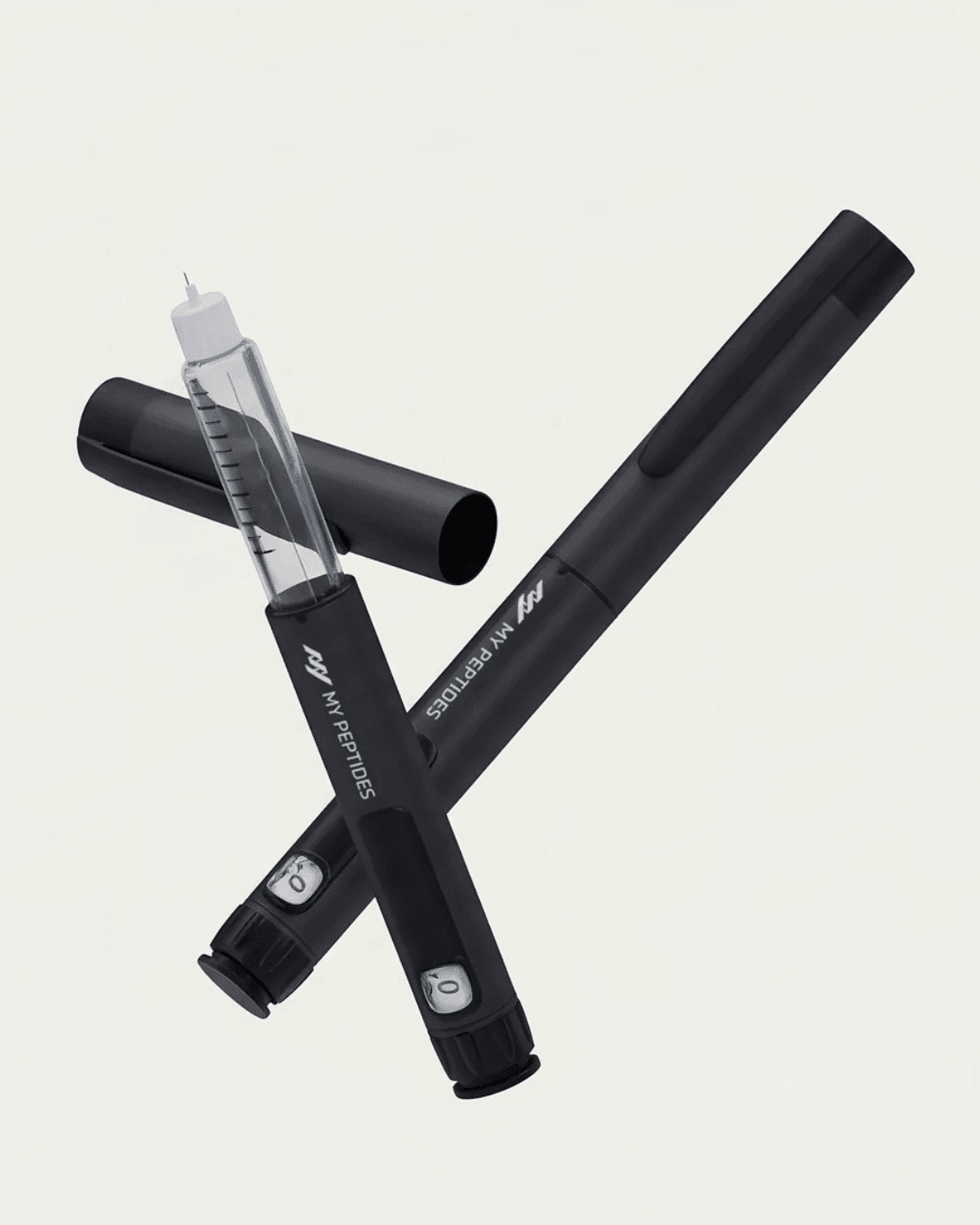
Free Reusable auto-injector pen, worth $50
A reusable pen is added free to your order, automatically.
- Same-day dispatch on orders placed before the daily cut-off.
- Free shipping over $100, tracked.
- Cold-chain packed: sealed foil pouch, ice packs, plain outer box.
- Batch-specific Certificate of Analysis included.
| Designation | Nicotinamide adenine dinucleotide (NAD⁺) |
| CAS Number | 53-84-9 |
| Molecular Formula | C₂₁H₂₇N₇O₁₄P₂ |
| Molecular Weight | 663.4 g/mol |
| Strength | 1000mg |
| Concentration | 333.33 mg/ml |
| Purity | ≥99% (HPLC) |
| Certificate of Analysis | Batch-specific COA included |
How we ship it
Every pre-mixed vial ships cold from the warehouse serving your region and arrives in a plain box. Refrigerate on arrival at 2–8 °C.
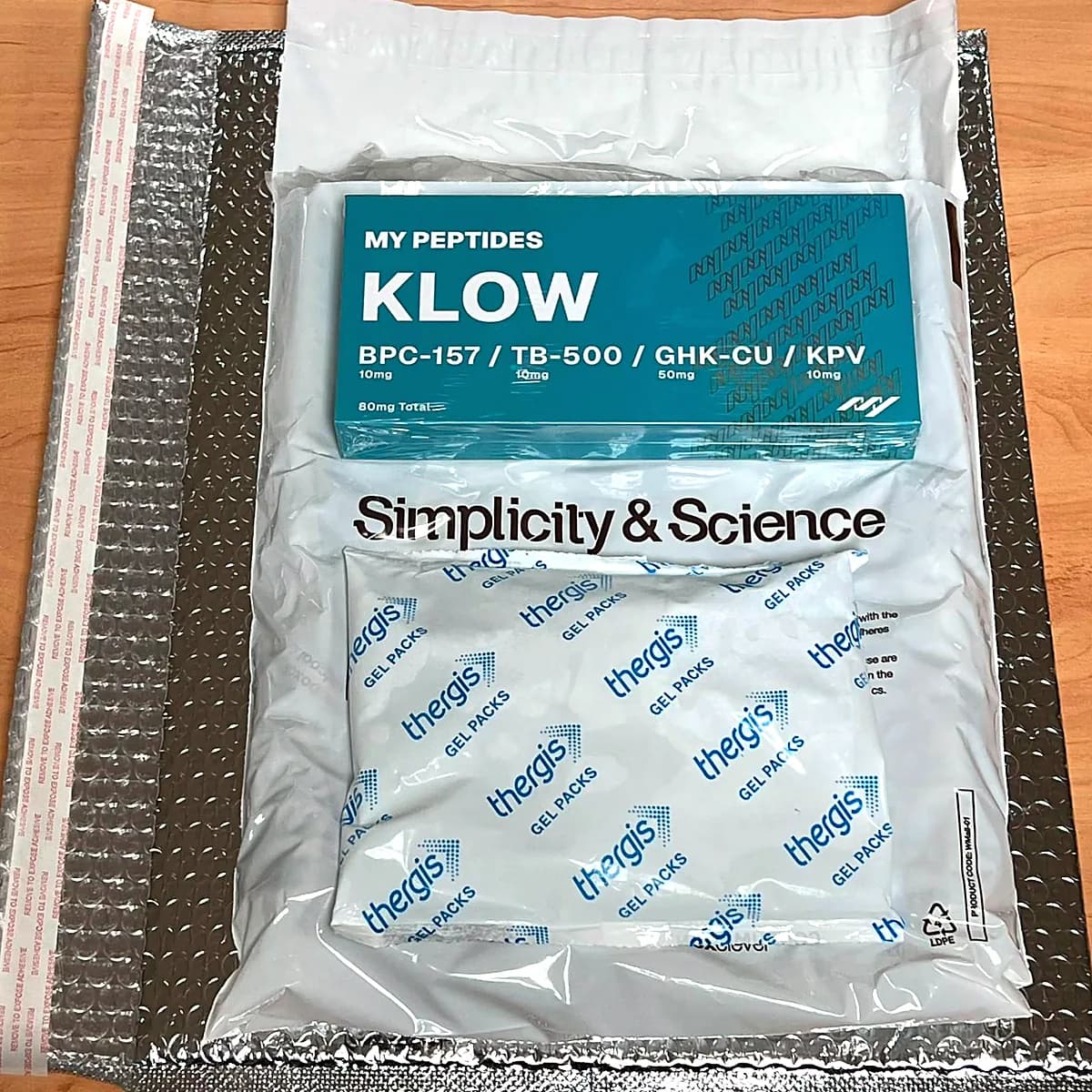
Chilled
Vials travel with frozen gel packs inside a sealed foil pouch, which holds temperature for roughly seven days — far longer than the journey needs, so the cold chain has room to spare.
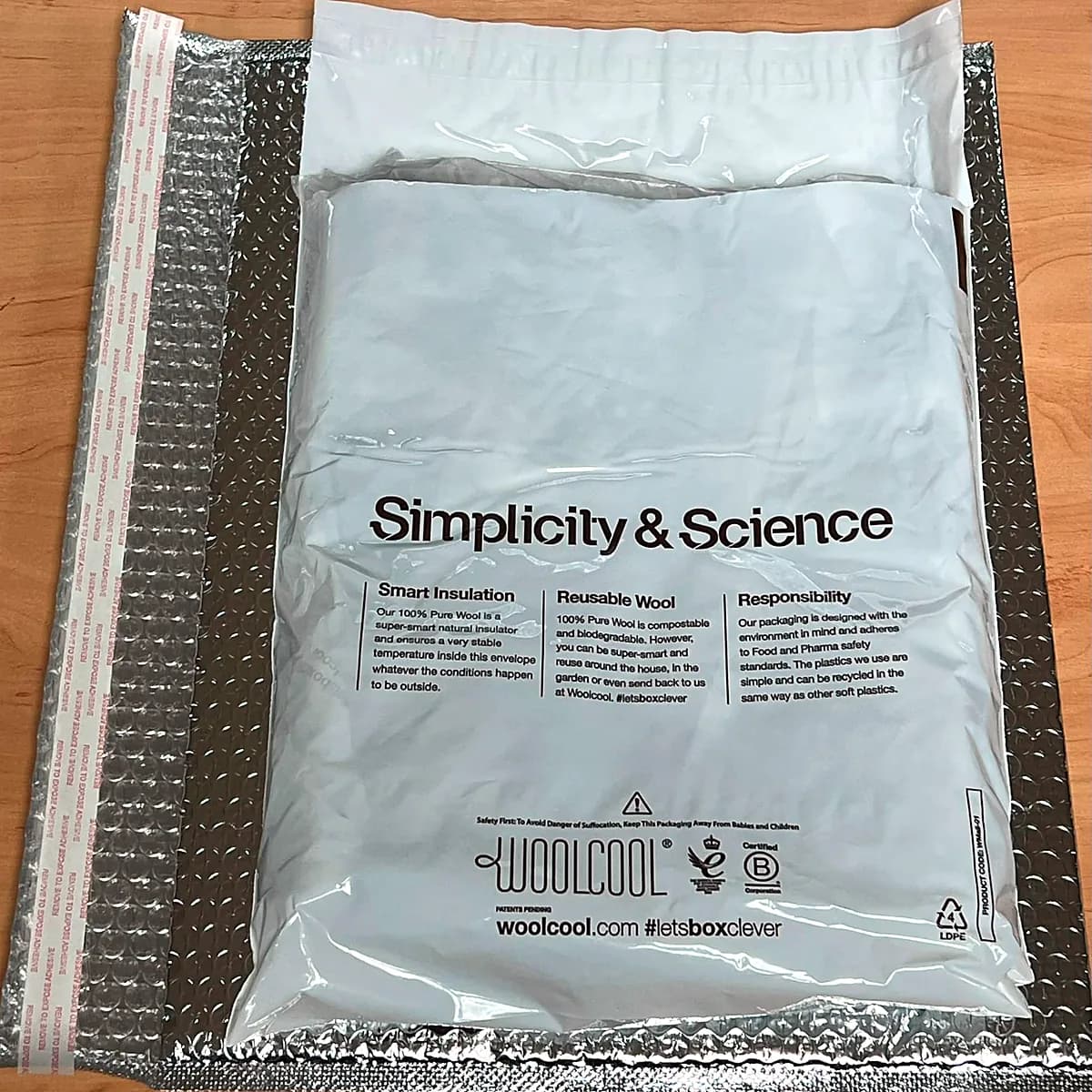
Insulated
The pouch sits inside a wool-lined envelope, so the cold chain survives a normal courier journey.
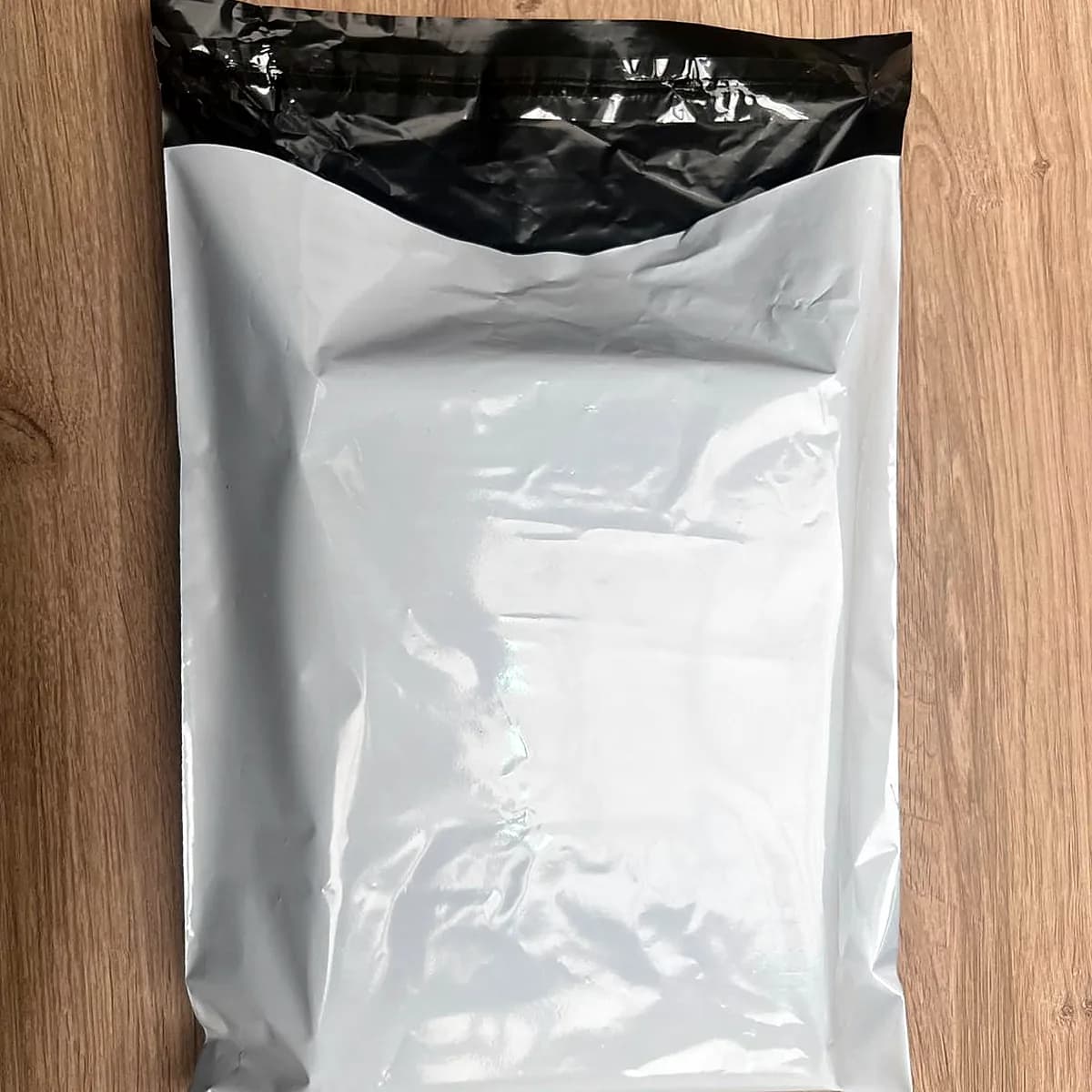
Discreet
Plain outer box with no branding and nothing on the label that names the contents.
Same-day dispatch
Order before the daily cut-off, Monday to Friday.
Free over $100
Tracked, next business day.
2–8 °C on arrival
Refrigerate as soon as the parcel lands.
NAD+ Kit
$350.00 · Qty 1
NAD+ Kit: dinucleotide chemistry, identity testing and buying criteria for US laboratories
NAD+ (nicotinamide adenine dinucleotide) is an endogenous pyridine dinucleotide — two nucleotides, one bearing nicotinamide and one bearing adenine, joined through a pyrophosphate bridge — supplied here as research material under the catalog listing NAD+ Kit, 1000mg.
${RUO_NOTE}
It is not a peptide, and that changes what you should check
Almost everything else in this catalog is a peptide: an amide-linked chain of amino acids, defined by sequence, and analyzed with the toolkit that suits chains — reversed-phase HPLC purity, ESI-MS or MALDI for molecular weight, sometimes amino acid analysis or peptide mapping. NAD+ is a dinucleotide, molecular formula C21H27N7O14P2, free-acid formula weight near 663. There is no sequence to confirm and no peptide-content figure to interpret. A buyer who applies peptide-shaped expectations to this item will ask for the wrong documents and misread the ones they get.
The salt form is the first thing to settle. NAD+ is commonly offered as the free acid or as a sodium salt, and the two have different formula weights, so a mass figure on a label is only interpretable once the form is stated. Ask which form the material is, and confirm the certificate names it rather than leaving it implied.
Cofactor and substrate are two different roles
Most descriptions stop at "redox cofactor," which covers half the chemistry. In the redox role, NAD+ accepts a hydride at the C4 position of the nicotinamide ring to give NADH, and cycles back. That reaction is stoichiometrically reversible and sits at the center of glycolysis, the TCA cycle and oxidative phosphorylation — the molecule is recycled, not consumed.
The second role is different in kind. Enzyme classes including the sirtuins, the PARPs and the CD38/157 ecto-enzymes cleave the glycosidic bond between nicotinamide and the ribose, releasing nicotinamide and transferring the ADP-ribose moiety. Here NAD+ is a substrate: it is destroyed by the reaction and has to be resynthesized, largely through the salvage route running via NAMPT and the NMNAT isoforms. For assay design this distinction is not academic. A recycling reaction can be run with catalytic dinucleotide present; a consuming reaction depletes the pool over the course of the experiment, and its readout depends on how much intact NAD+ was present at the start. That is one reason purity and hydrolytic integrity matter more here than they would for a stable small molecule acting only as a spectator.
Analytical identity: what a good certificate demonstrates
| Method | What it establishes | What to look for |
|---|---|---|
| RP-HPLC with UV detection | Chromatographic purity and impurity profile | Detection at 260 nm, a stated purity figure, and a visible baseline — not a bare percentage |
| UV spectroscopy | Identity and oxidation state | Absorbance maximum near 260 nm; NADH, not NAD+, is what absorbs at 340 nm |
| Mass spectrometry | Molecular mass | A mass consistent with the stated salt form, not a generic "MS conforms" line |
| Water content | How much of a stated mass is compound rather than associated water | Where the material is supplied as a solid, ask for Karl Fischer or loss-on-drying; otherwise ask for the equivalent figure |
| Residual solvents / counter-ion | What else is in the container | Named and quantified, or explicitly declared not tested |
The 260/340 relationship is the most useful quick check on this molecule, and one peptide buyers rarely think to make. Oxidized NAD+ has essentially no absorbance at 340 nm; NADH does. Meaningful 340 nm absorbance in material sold as NAD+ points to reduced contaminant. The diagnostic degradation products — free nicotinamide and ADP-ribose from cleavage of the glycosidic bond — show up instead as separate, earlier-eluting peaks in a reversed-phase run, which is why a chromatogram is worth more to you than a summary line.
Stability behavior to plan around
NAD+ and NADH have close to opposite stability profiles, and this trips people up. The oxidized form is comparatively tolerant of acidic conditions and degrades quickly under alkaline ones, where hydroxide adds to the nicotinamide ring and the glycosidic bond is cleaved. The reduced form is the reverse: relatively stable in base, labile in acid. Both are heat-sensitive, and both degrade considerably faster in aqueous solution than in the isolated solid state.
The practical consequences are simple. Hold the material at the temperature its container specifies, minimize freeze-thaw excursions, avoid alkaline buffers for anything you intend to store rather than consume, and treat any aqueous NAD+ preparation as a working solution with a short useful life rather than a stock you return to for months. Follow the storage statement on the container itself, and note the certificate date when judging how much history the material already carries.
Format: confirm what the kit contains before you order
This item is a kit, and its exact packaged contents are not described on this page. Nothing here should be read as a statement of what is in the box. Check the listing itself, and if the format is material to your protocol, confirm it in writing before you buy.
Format decides which half of the section above applies to you. A material supplied as a solid has to be brought into solution in the laboratory first, which is a step you control and are accountable for; a material already in solution removes that step but arrives with its solution-phase clock already running. Neither is better in the abstract, and which trade-off suits you is a question about your protocol, not about the compound. Establish which you are buying before you plan around it.
Origin, testing, and what to verify from any supplier
Material sold here is synthesized in the UK and verified in US laboratories. Ask any vendor — including this one — to make that chain explicit, because most failure modes in this market are documentation failures rather than chemistry failures.
- Does the certificate carry a batch or lot number that matches the container in your hand? A certificate for a different lot is a marketing document.
- Is the testing laboratory named, with a report date, and is the report commissioned under the vendor's own name or re-hosted from an upstream supplier? Ask which, and judge for yourself.
- Are there raw chromatograms and spectra, or only a table of pass/fail claims?
- Is the salt form stated, and a water or equivalent content figure given, so the number on the label is interpretable?
- Does the vendor publish documentation openly, as at /coa, or only on request after payment?
- Does the shipping route match the stability profile above — and does the vendor say what happens if a shipment arrives warm?
The published literature
NAD+ biochemistry is an active area of in-vitro and animal laboratory research: sirtuin and PARP enzymology, methods for measuring cellular redox state, and the salvage-pathway enzymes that regenerate the pool. That body of work is being examined and is not settled. Nothing here draws conclusions from it, and none of it is offered as evidence of any outcome in humans or animals. This material is supplied for laboratory research only.
NAD+ Kit: research FAQs
- What is NAD+ Kit?
- NAD+ Kit is a research kit supplying NAD+ (nicotinamide adenine dinucleotide), an endogenous pyridine nucleotide that acts as a central redox cofactor and signalling molecule in cellular metabolism. In its oxidised form it participates in the electron-transfer reactions underlying glycolysis, oxidative phosphorylation and mitochondrial energy production. It is supplied strictly for in-vitro laboratory research use only.
- What is NAD+ Kit studied for in research?
- In biochemical and cellular research systems, NAD+ has been investigated for its role in redox balance and as a substrate for NAD+-dependent enzymes. Reported laboratory work covers its involvement in signalling pathways including sirtuins, poly(ADP-ribose) polymerases (PARPs) and cyclic ADP-ribose-generating enzymes linked to DNA repair, chromatin regulation and calcium signalling. These are preclinical, cell-based observations, and experimental outcomes depend on intracellular NAD+/NADH ratios, compartmentalisation and the metabolic state of the model system.
- Is NAD+ Kit legal to buy?
- NAD+ Kit is legal to buy and possess for laboratory research purposes. It is not a licensed medicine and cannot be sold or supplied for human or veterinary consumption. Every order ships labelled for in-vitro research use only.
- What purity is your NAD+ Kit, and is it lab-tested?
- NAD+ Kit is verified to 99%+ purity by HPLC analysis. The figure printed on each batch's Certificate of Analysis is the actual lab-recorded value for that batch, not a marketing claim. Material is synthesised and dispatched from our own UK facility.
- Does NAD+ Kit come with a Certificate of Analysis?
- Yes, a batch-specific Certificate of Analysis (COA) ships with every order. You can also view sample COAs in our COA library before purchasing so you can see the analytical detail we provide.
- How is NAD+ Kit supplied, stored and handled for research?
- The NAD+ Kit is supplied in sealed vials and shipped cold-chain. Refrigerate at 2°C–8°C as indicated on the label, keep the vials sealed and away from light, and check the batch Certificate of Analysis supplied with your order for the recorded appearance and presentation. Handle under standard aseptic laboratory practice, consistent with in-vitro research use only.
Research guides
- Research peptides, explained: what they are and how US labs use them
- MOTS-c peptide: what it is and why its mitochondrial origin matters
- Is NAD+ a peptide, or a coenzyme?
- Storing research peptides so they reach the assay intact
- Bacteriostatic water (bac water) for peptides: solution stability
- What a Certificate of Analysis actually tells you
Disclaimer: Products sold on this website are intended for research and laboratory use only. They are not intended for human or animal consumption. Purchasers must be at least 18 years of age. By using this site, you agree to our Terms & Conditions.