

Tesamorelin Peptide | 20mg | 3ml
Tesamorelin is a synthetic peptide analogue of human growth hormone–releasing hormone (GHRH 1–44), engineered for research use in studying hypothalamic–pituitary communication and growth hormone regulatory pathways. Structural modifications increase its stability compared with native GHRH, allowing it to function reliably in controlled laboratory environments. In biochemical and cellular research systems, Tesamorelin binds to and activates the GHRH receptor found on pituitary‑derived cells, initiating intracellular signalling cascades that regulate growth hormone synthesis and secretion. Experimental work commonly evaluates receptor‑binding characteristics, cAMP‑dependent signalling activity, and downstream transcriptional responses under defined exposure conditions. The molecular effects observed vary with concentration, exposure duration, and model system, and are used to characterise GHRH receptor signalling rather than to infer physiological outcomes.
Strength
20mg
Concentration
6.67 mg/ml
Purity
≥99% HPLC
COA
Included
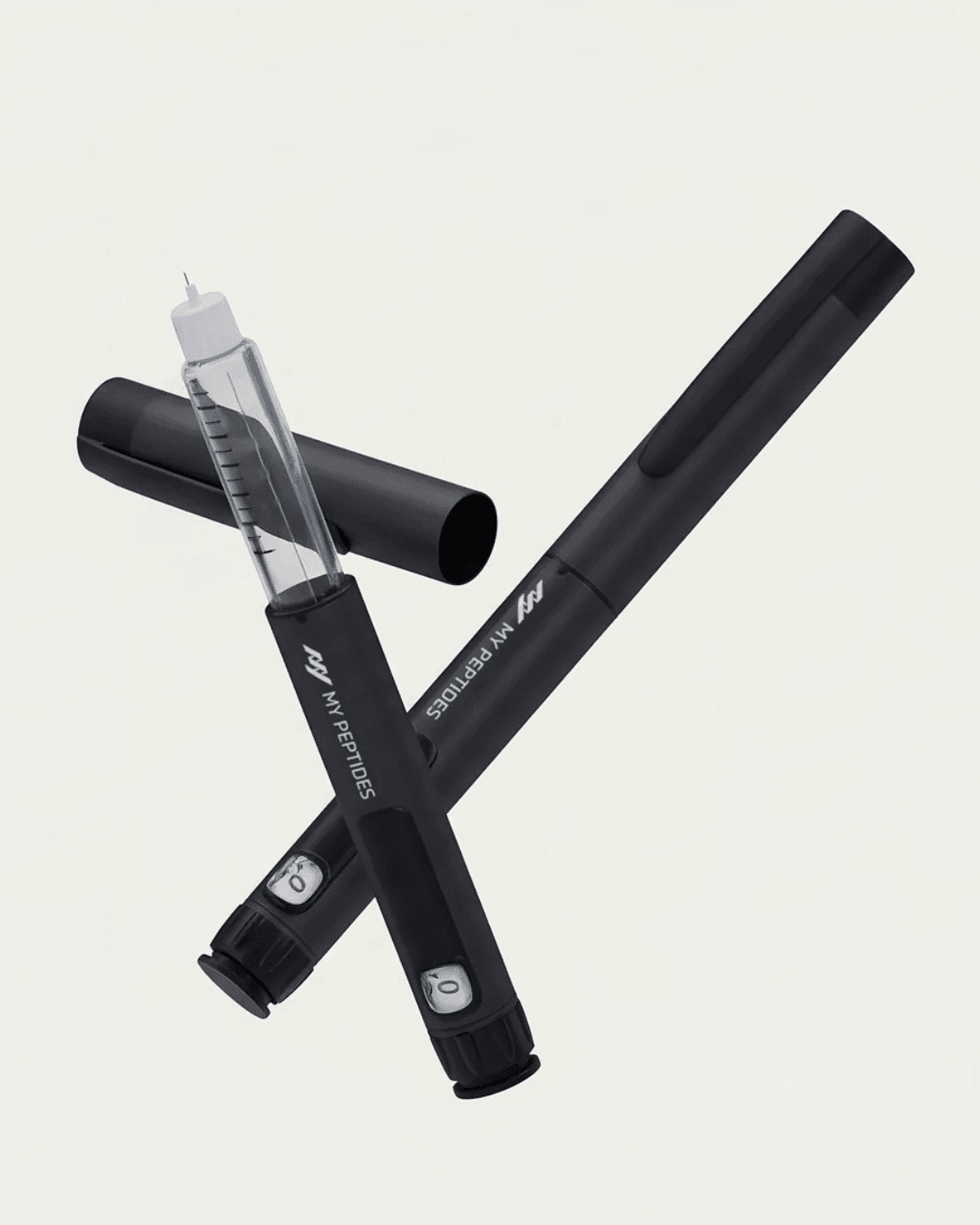
Free Reusable auto-injector pen, worth $50
A reusable pen is added free to your order, automatically.
- Same-day dispatch on orders placed before the daily cut-off.
- Free shipping over $100, tracked.
- Cold-chain packed: sealed foil pouch, ice packs, plain outer box.
- Batch-specific Certificate of Analysis included.
| Designation | GHRH(1-44) analog |
| CAS Number | 218949-48-5 |
| Molecular Formula | C₂₂₁H₃₆₆N₇₂O₆₇S |
| Molecular Weight | 5135.9 g/mol |
| Strength | 20mg |
| Concentration | 6.67 mg/ml |
| Presentation | 3ml Vial |
| Purity | ≥99% (HPLC) |
| Storage | Must be kept in a refrigerator at 2°C–8°C for optimal potency. |
| Certificate of Analysis | Batch-specific COA included |
How we ship it
Every pre-mixed vial ships cold from the warehouse serving your region and arrives in a plain box. Refrigerate on arrival at 2–8 °C.
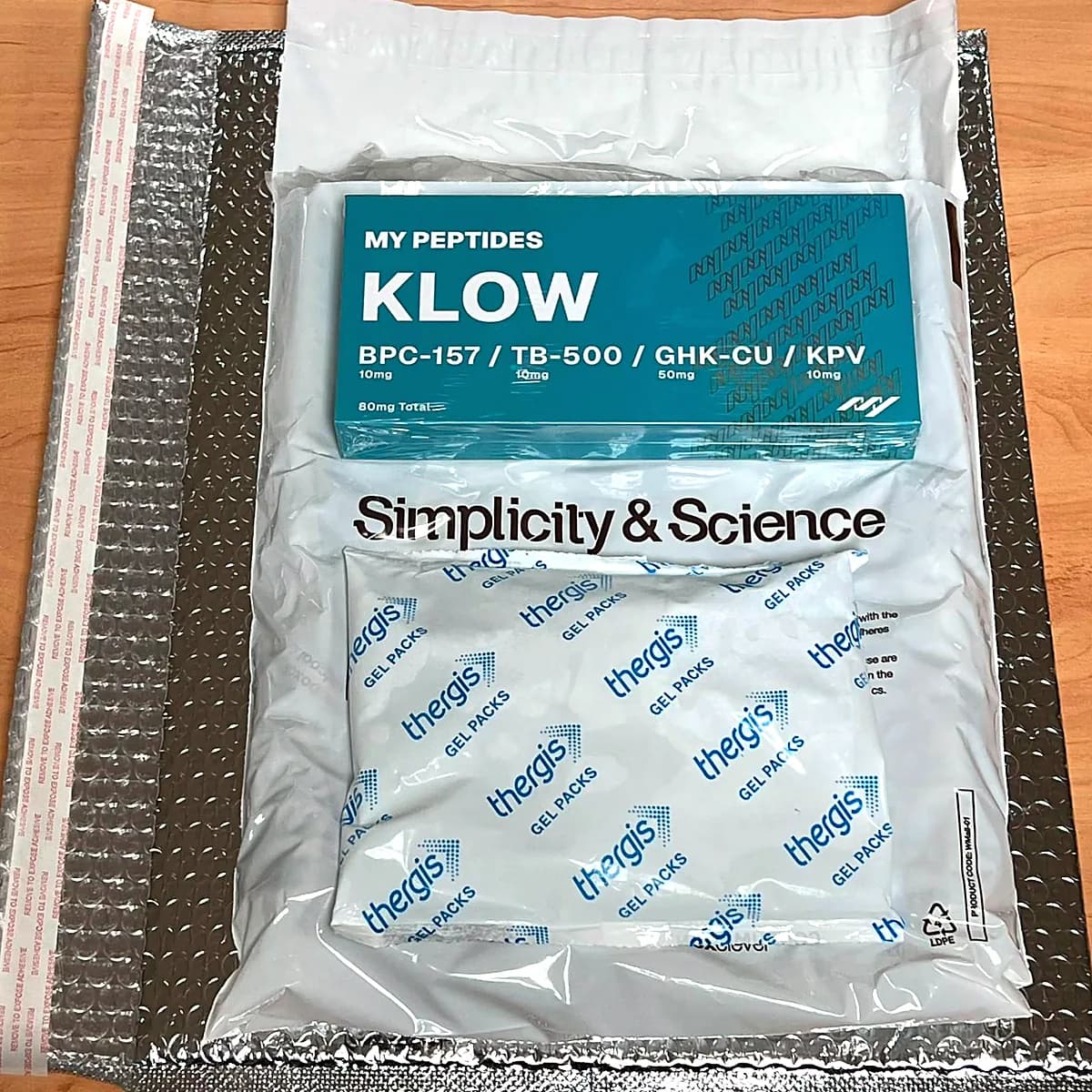
Chilled
Vials travel with frozen gel packs inside a sealed foil pouch, which holds temperature for roughly seven days — far longer than the journey needs, so the cold chain has room to spare.
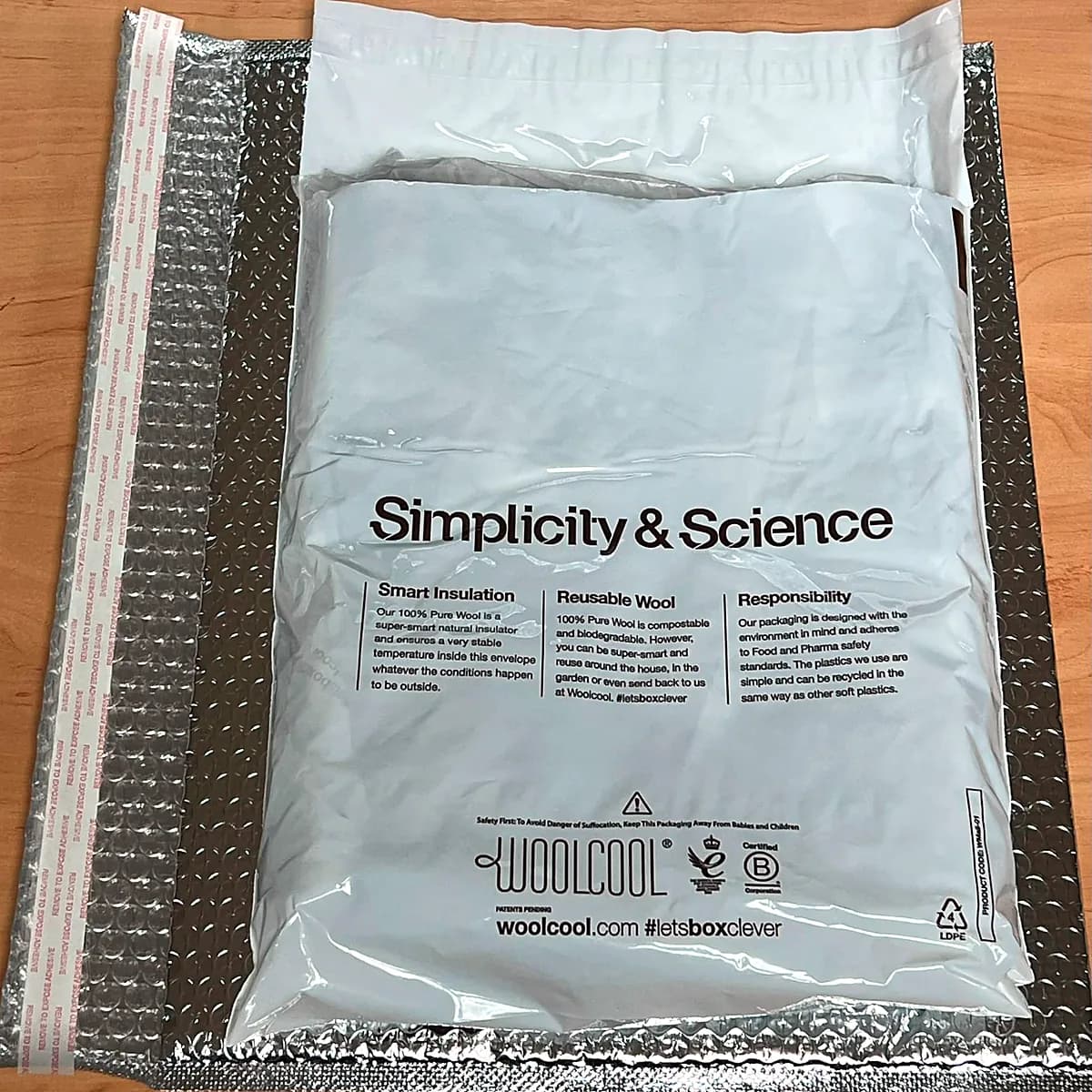
Insulated
The pouch sits inside a wool-lined envelope, so the cold chain survives a normal courier journey.
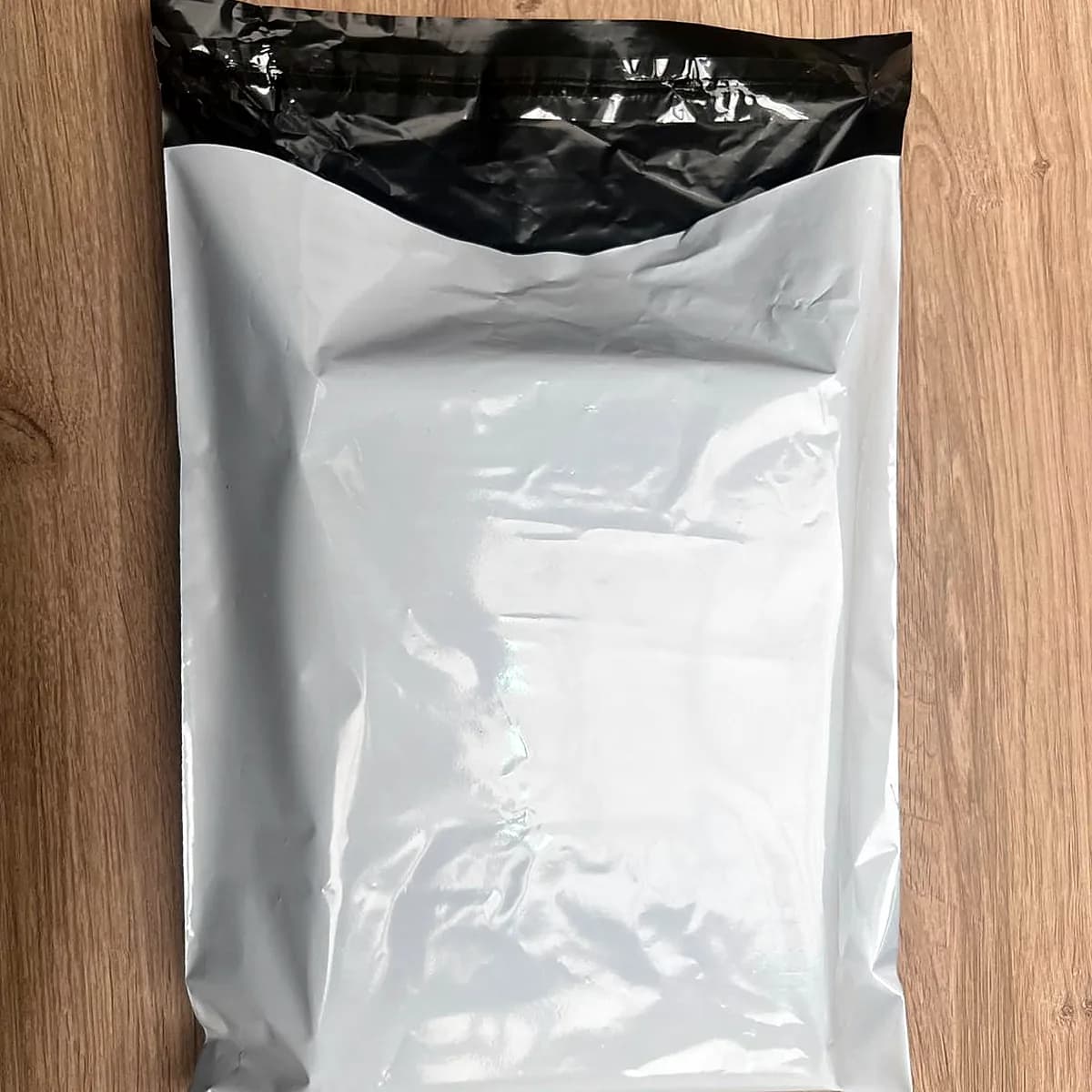
Discreet
Plain outer box with no branding and nothing on the label that names the contents.
Same-day dispatch
Order before the daily cut-off, Monday to Friday.
Free over $100
Tracked, next business day.
2–8 °C on arrival
Refrigerate as soon as the parcel lands.
TESAMORELIN
$200.00 · Qty 1
Tesamorelin: chemistry, format and verification criteria for US laboratory buyers
Tesamorelin is a synthetic 44-residue analogue of human growth-hormone-releasing hormone — GHRH (1-44) — carrying a trans-3-hexenoyl group on its N-terminal tyrosine. Supplied at 20mg per vial.
${RUO_NOTE}
The molecule, and why the N-terminus is capped
Tesamorelin retains the complete GHRH (1-44) sequence, C-terminally amidated, and adds one six-carbon unsaturated acyl group at the amino terminus. That cap is the entire design intent of the analogue.
Native GHRH is an awkward reagent in any enzyme-containing system, because dipeptidyl peptidase-4 (DPP-4) cleaves after the position-2 alanine and removes the Tyr-Ala dipeptide that the GHRH receptor's binding pocket requires. What remains is a different ligand, not a weaker one. The trans-3-hexenoyl group acylates the alpha-amino group of the N-terminal tyrosine — it caps that free amine rather than occupying or replacing residue 1, and the sequence itself is unchanged. The added steric bulk obstructs DPP-4 recognition, so the intact 44-mer persists markedly longer than unmodified GHRH when the two are incubated side by side under identical in-vitro conditions. The receptor-contact residues, the helical mid-section and the C-terminal amide are left untouched.
Two practical consequences follow for a receiving laboratory. First, this is a large peptide by catalog standards — around 5.1 kDa, with the hexenoyl cap contributing roughly 96 Da over native GHRH. On LC-MS you should expect a multiply charged envelope rather than a tidy single-charge ion. Second, the helical region makes the molecule conformationally sensitive to organic content and buffer composition, so retention time is not transferable between methods — compare peaks only against a chromatogram run on your own gradient.
GHRH analogue and secretagogue are not interchangeable terms
Compounds in this corner of a catalog get grouped together loosely. They should not be: two different receptor families are involved.
| Compound | Class | Structural basis |
|---|---|---|
| Tesamorelin | GHRH analogue | Full GHRH (1-44), N-terminally acylated for protease resistance |
| CJC-1295 | GHRH analogue | GHRH-based; the "with DAC" variant adds a drug affinity complex that binds albumin |
| Sermorelin | GHRH analogue | GHRH (1-29), the shortest fragment that retains receptor activity |
| Ipamorelin | Not a GHRH analogue | Selective ghrelin-receptor (GHS-R) agonist; a five-residue peptide unrelated in sequence |
The GHRH receptor is a class B G-protein-coupled receptor coupling principally through Gs and cAMP. GHS-R1a is a class A receptor coupling principally through Gq and phospholipase C. They are distinct proteins with distinct ligand requirements, and the reason these compounds appear in the same experimental designs is that laboratory work examines whether two separate signaling routes converge on shared downstream readouts in cell models — a receptor-pharmacology question, studied in vitro. If your protocol involves both receptor families, /products/hulk-stack pairs CJC-1295 with DAC and Ipamorelin as a single listing.
Two formats, two different sets of risks
Research peptide reaches a laboratory either as a lyophilized powder to reconstitute or already in solution. Neither format is inherently better; each moves the risk somewhere else, and it is worth being explicit about where.
| Consideration | Solution | Lyophilized powder |
|---|---|---|
| State on arrival | Ready to sample; no preparation step | Cake or film requiring solubilization |
| Source of variance | Fixed at fill; consistent vial to vial within a lot | Introduced in your lab — solvent choice, technique, incomplete dissolution |
| Mass verification | Stated content is verified by assay, not by weighing | Residual water and counterion mass sit between net peptide and gross fill weight |
| Transit tolerance | The less forgiving format; ambient exposure matters more | Dry solids are comparatively robust in transit |
| Degradation routes | Hydrolysis, oxidation and deamidation run in solution | Largely arrested while dry |
| What you are trusting | The supplier's fill accuracy and solution chemistry | Your own preparation |
A solution removes the largest single source of between-operator inconsistency; a powder gives longer dated storage and shrugs off a slow courier. Confirm which format a vial is before building an incoming-goods workflow around it, and assess the condition of what actually arrives rather than assume it.
Composition questions to ask about any vial
A stated strength describes peptide content, not vial content. Ask the supplier what else is present: the solvent system if the material is in solution, whether a preservative such as benzyl alcohol is included, whether the pH is buffered and to what, and whether the counterion is acetate or trifluoroacetate. TFA in particular is worth pinning down — residual trifluoroacetate is a known source of interference in cell-based assays and is easy to overlook when a COA reports only purity.
For a lyophilized vial, ask for water content by Karl Fischer and for counterion content, then work out net peptide mass before comparing prices per milligram between a powder and a solution.
Reading a Certificate of Analysis properly
A COA is a document about one lot, or it is decoration. Ours are published at /coa.
What a usable certificate contains: a lot number that matches the vial label; the analytical date; the method, column and gradient for the purity determination; the full chromatogram rather than a cropped image; a mass-spectrometry trace with the observed mass reconciled against theoretical; and the name of the laboratory that performed the work.
What should stop a purchase: no lot number, or a lot number that appears on multiple products; purity quoted without a method; a chromatogram with no axis labels or an obviously trimmed baseline; identical documents recycled across different compounds with the title swapped; and mass spectrometry omitted entirely, which leaves the identity of the peak unestablished. Purity tells you how much of the material is one thing. Only mass confirmation tells you which thing.
For a 44-residue peptide, identity confirmation matters more than it does for a short chain. Deletion sequences and truncations produced during synthesis can co-elute closely with the target and are separable on mass long before they are separable on retention time.
Origin and testing
This material is synthesized in the UK and verified in US laboratories. Stating both halves is deliberate: synthesis location and testing location are separate facts, and a supplier that blurs them is telling you less than it appears to.
Storage and handling
Peptide belongs cold and dark in either format. Protect from light, minimize freeze-thaw cycling by working from aliquots rather than the parent vial, and keep the vial upright and sealed between uses. The GHRH (1-44) sequence carries one methionine (Met27) and two asparagine residues (Asn8 and Asn35), which makes oxidation and deamidation the degradation chemistries to watch; both are accelerated by warmth, extremes of pH and repeated headspace exposure, and both run faster in solution than in a dry cake. Visible haze, precipitate or discoloration is a reason to quarantine a vial and re-assay, not to proceed.
Research context
The published work on tesamorelin is a body of in-vitro and animal laboratory research under examination — receptor binding and selectivity at GHRHR, proteolytic stability against DPP-4, and signaling characterization in cell systems. It is an active area of examination rather than a settled account, and nothing on this page draws conclusions from it. Tesamorelin appears on the WADA Prohibited List under section S2.
Tesamorelin: research FAQs
- What is Tesamorelin?
- Tesamorelin is a synthetic peptide analogue of human growth hormone-releasing hormone (GHRH 1-44), belonging to the GHRH family of neuroendocrine peptides. Structural modifications to the native sequence increase its stability, allowing it to function reliably in controlled laboratory conditions. It is supplied strictly as a research chemical for in-vitro laboratory research use only.
- What is Tesamorelin studied for in research?
- In biochemical and cellular research systems, Tesamorelin has been investigated in preclinical and in-vitro work for its binding to and activation of the GHRH receptor expressed on pituitary-derived cells, and the intracellular signalling cascades associated with growth hormone synthesis and secretion that follow. Such studies commonly characterise receptor-binding behaviour, cAMP-dependent signalling activity, and downstream transcriptional responses under defined exposure conditions. These are laboratory observations that vary with concentration, exposure duration, and model system, and are used to characterise GHRH receptor signalling rather than to infer physiological outcomes in humans or animals.
- Is Tesamorelin legal to buy?
- Tesamorelin is legal to buy and possess for laboratory research purposes. It is not a licensed medicine and cannot be sold for human or veterinary use or consumption. Every vial ships labelled for in-vitro research use only.
- What purity is your Tesamorelin, and is it lab-tested?
- Our Tesamorelin is verified to 99%+ purity by HPLC analysis. The figure printed on each batch's Certificate of Analysis is the actual lab-recorded value for that batch, not a marketing claim. Material is synthesised and dispatched from our own UK facility rather than imported or repackaged, and is supplied for in-vitro research use only.
- Does Tesamorelin come with a Certificate of Analysis?
- Yes. A batch-specific Certificate of Analysis (COA) ships with every order, documenting the purity and identity results for the material you receive. You can also view sample COAs in our COA library before purchasing. All material is supplied for in-vitro research use only.
- How is Tesamorelin supplied, stored and handled for research?
- Tesamorelin is supplied in a sealed vial and shipped cold-chain. Refrigerate at 2°C–8°C as indicated on the label, keep the vial sealed and away from light, and check the batch Certificate of Analysis supplied with your order for the recorded appearance and presentation. Handling should follow standard aseptic laboratory practice, and the material is intended solely for in-vitro research use.
Research guides
Disclaimer: Products sold on this website are intended for research and laboratory use only. They are not intended for human or animal consumption. Purchasers must be at least 18 years of age. By using this site, you agree to our Terms & Conditions.