

GHK-Cu Copper Peptide | 100mg | 3ml
GHK‑Cu is an endogenous copper–peptide complex that acts as a natural signalling molecule involved in metal transport and cellular regulation. It is composed of the tripeptide glycyl‑L‑histidyl‑L‑lysine bound to a divalent copper ion, forming a high‑affinity chelated structure that enables controlled copper handling within biological environments. In biochemical and cellular research, GHK‑Cu influences signalling activity through both its peptide component and the biochemical functions of copper itself. Copper is an essential trace mineral required for a wide range of enzymes and structural proteins that support redox balance, extracellular matrix formation, and metabolic processes. By serving as a carrier and regulator of bioavailable copper, GHK‑Cu contributes to maintaining metal homeostasis and modulating downstream pathways associated with cellular proliferation, differentiation, and tissue remodelling. Across preclinical research systems, GHK‑Cu exposure has been linked to shifts in gene expression and modulation of pathways governing extracellular matrix turnover, oxidative stress responses, and cellular renewal. These outcomes vary according to concentration, exposure duration, and experimental model, making GHK‑Cu a versatile tool for studying copper‑dependent signalling and peptide–metal interactions in both in vitro and in vivo contexts.
Strength
100mg
Concentration
33.33 mg/ml
Purity
≥99% HPLC
COA
Included
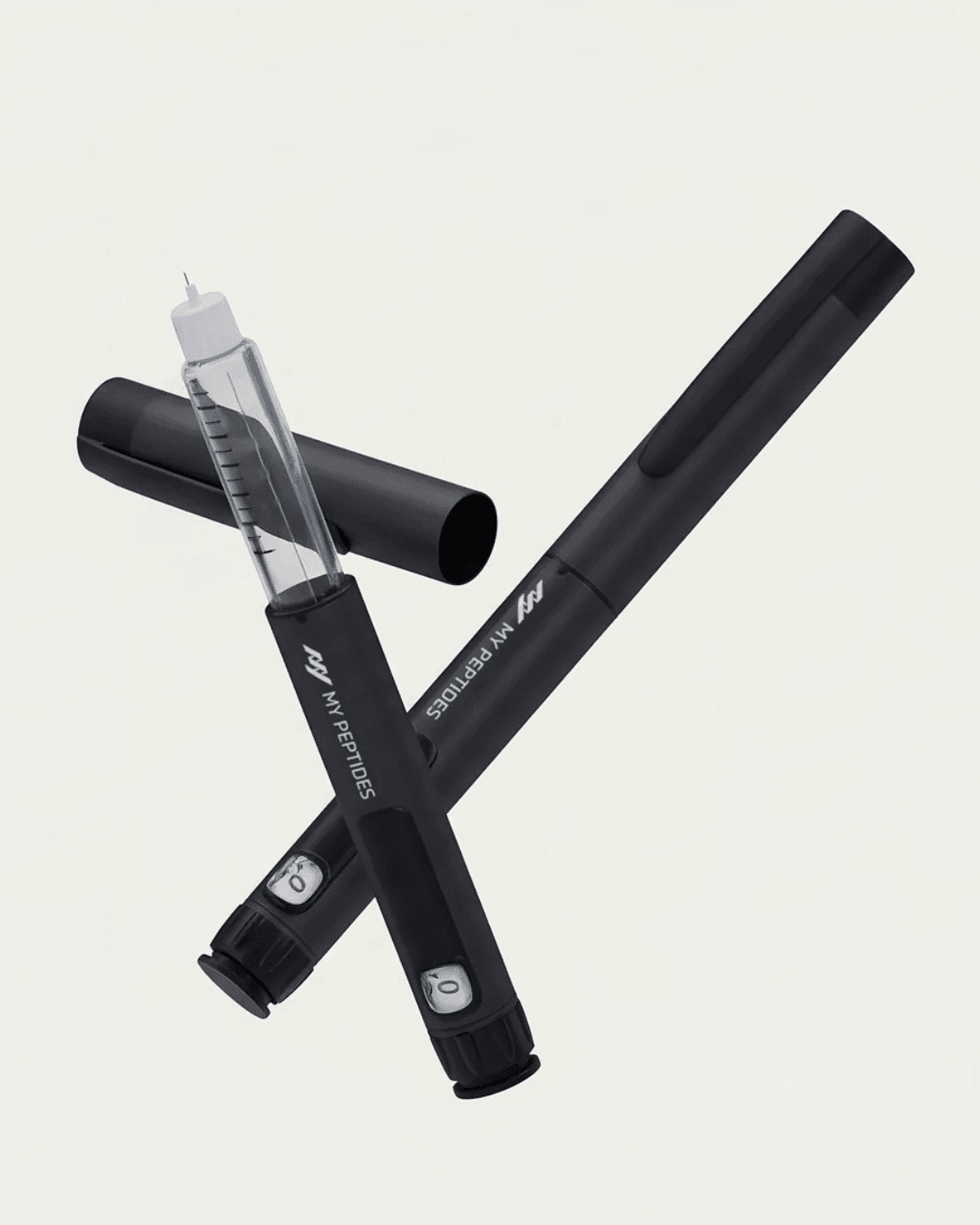
Free Reusable auto-injector pen, worth $50
A reusable pen is added free to your order, automatically.
- Same-day dispatch on orders placed before the daily cut-off.
- Free shipping over $100, tracked.
- Cold-chain packed: sealed foil pouch, ice packs, plain outer box.
- Batch-specific Certificate of Analysis included.
| Designation | Copper tripeptide-1 (GHK-Cu) |
| CAS Number | 49557-75-7 |
| Molecular Formula | C₁₄H₂₂CuN₆O₄ |
| Molecular Weight | 401.9 g/mol |
| Sequence | Gly-His-Lys · Cu²⁺ |
| Strength | 100mg |
| Concentration | 33.33 mg/ml |
| Presentation | 3ml Vial |
| Appearance | Blue liquid |
| Purity | ≥99% (HPLC) |
| Storage | Must be kept in a refrigerator at 2°C–8°C for optimal potency. |
| Certificate of Analysis | Batch-specific COA included |
How we ship it
Every pre-mixed vial ships cold from the warehouse serving your region and arrives in a plain box. Refrigerate on arrival at 2–8 °C.
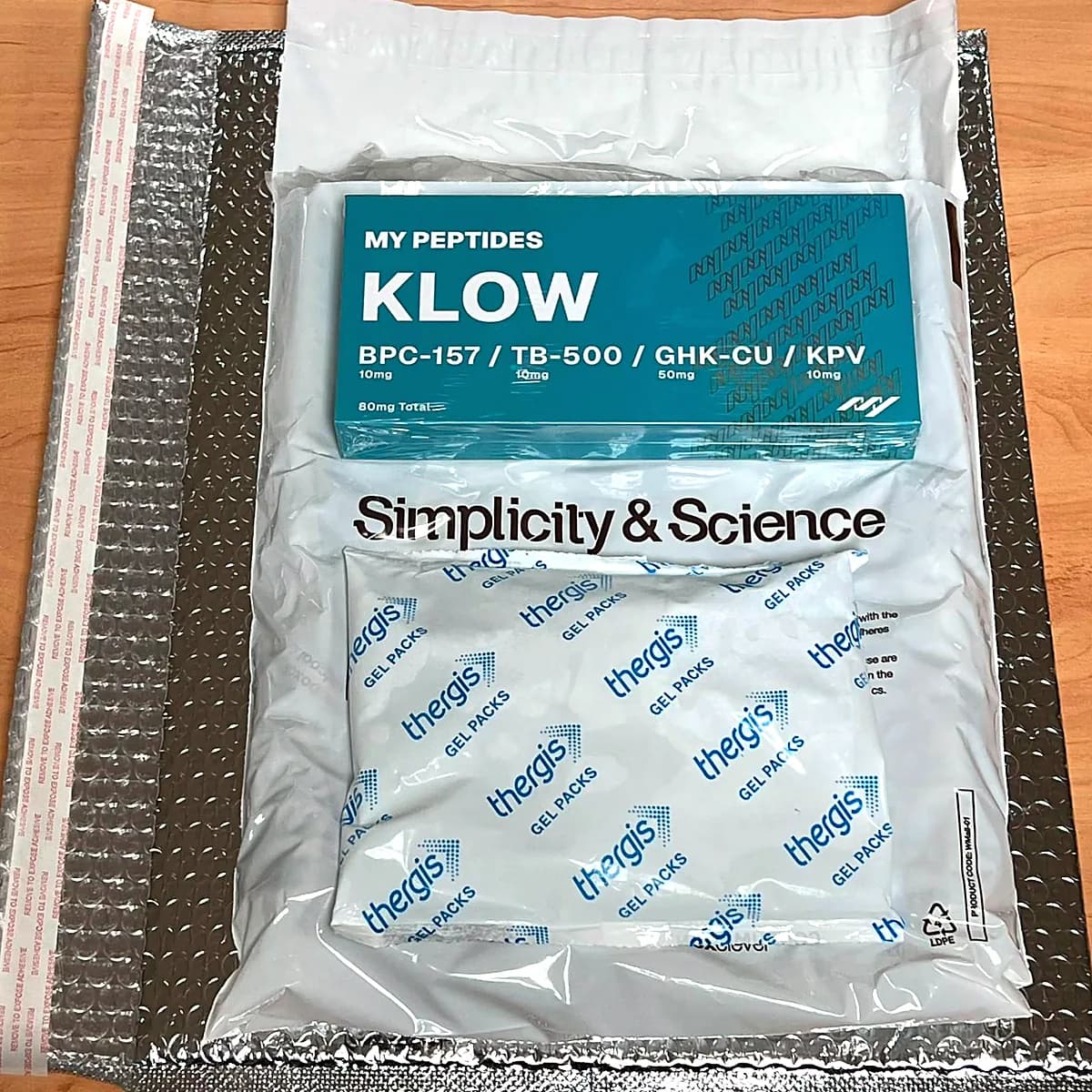
Chilled
Vials travel with frozen gel packs inside a sealed foil pouch, which holds temperature for roughly seven days — far longer than the journey needs, so the cold chain has room to spare.
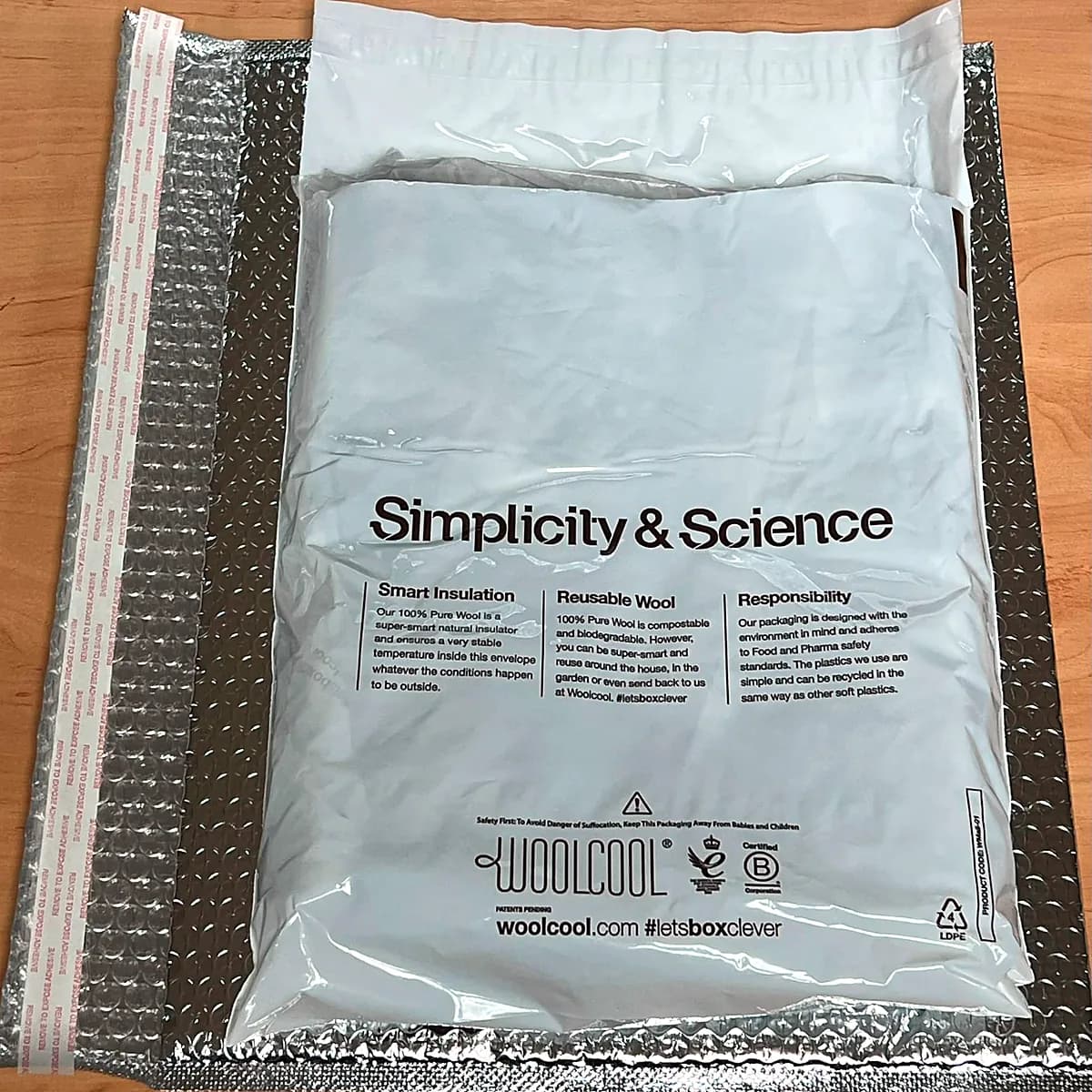
Insulated
The pouch sits inside a wool-lined envelope, so the cold chain survives a normal courier journey.
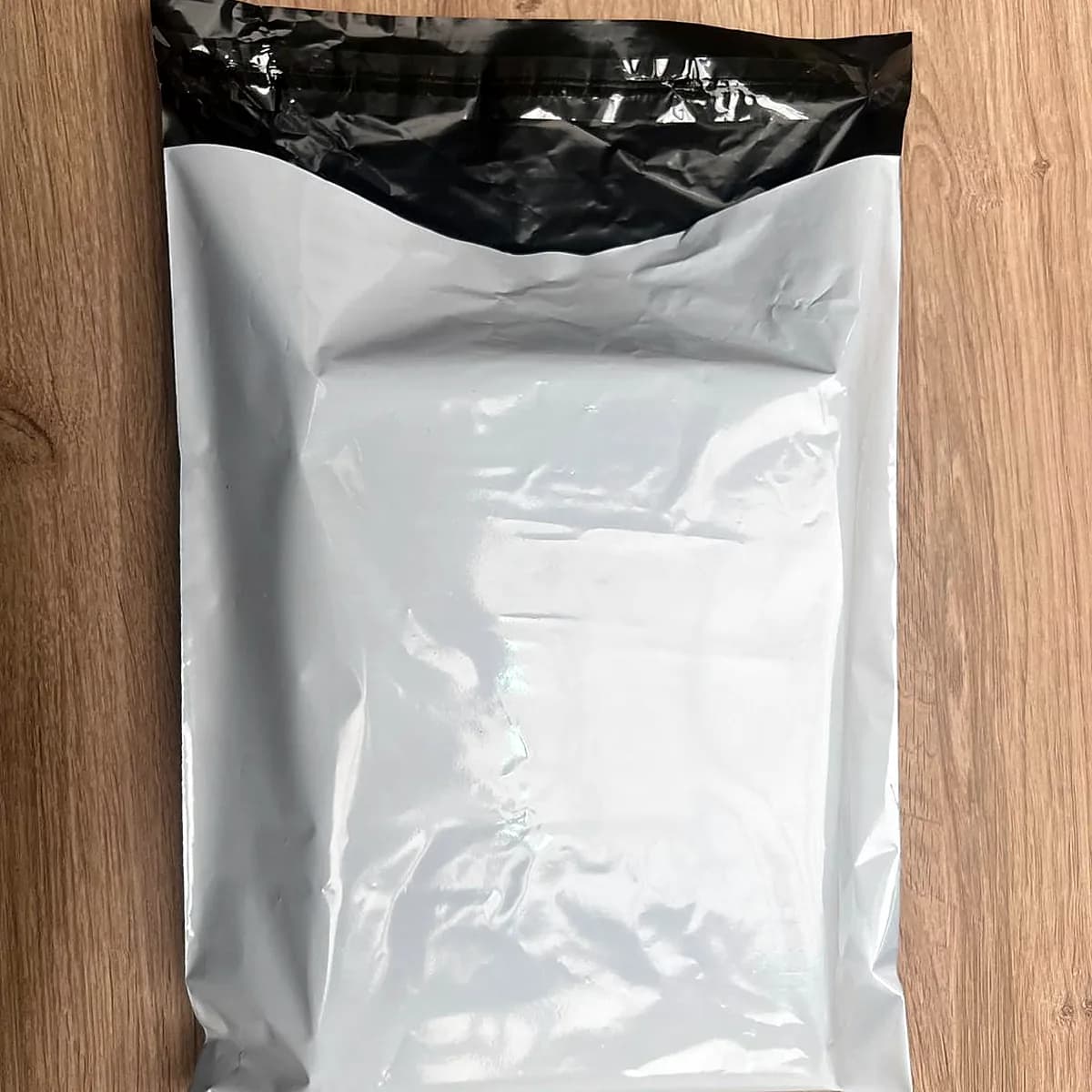
Discreet
Plain outer box with no branding and nothing on the label that names the contents.
Same-day dispatch
Order before the daily cut-off, Monday to Friday.
Free over $100
Tracked, next business day.
2–8 °C on arrival
Refrigerate as soon as the parcel lands.
GHK-CU
$200.00 · Qty 1
GHK-Cu: chemistry, identity and buying criteria for US laboratories
GHK-Cu is the copper(II) complex of the tripeptide glycyl-L-histidyl-L-lysine — three amino acids, glycine, histidine and lysine, with a single copper ion coordinated by the histidine imidazole and the peptide backbone. It is written GHK-Cu, GHK copper, or copper tripeptide-1, and all three refer to the same complex. What varies between suppliers is not the molecule but the format, the copper stoichiometry and whether the vial is accompanied by analysis you can actually read.
Research use only. Supplied strictly for in-vitro laboratory research. This page covers composition, chemistry, format, quality documentation and storage. It does not describe dosing, administration, or use in humans or animals, and makes no therapeutic claims.
What arrives, and why it is blue
Ours ships pre-mixed as a solution, 100mg per vial, sealed and cold-packed, with a batch-specific Certificate of Analysis. It is synthesized in our UK laboratory and verified in a US laboratory before each US batch is released.
The colour is the first identity check available to you without instrumentation. Correctly complexed GHK-Cu in solution is distinctly blue — a d-d transition of the coordinated Cu(II) centre. A GHK-Cu preparation that is colourless has either not complexed, or contains little copper. A preparation that is green or has visible precipitate has usually seen a pH excursion or copper hydroxide formation. None of this replaces an assay, but it is a thirty-second sanity check most buyers never perform.
Where the US market sits, and where a pre-mixed vial fits
Most GHK-Cu offered to US laboratories is lyophilized powder — a white-to-blue solid requiring reconstitution before any work begins. That format is cheaper to ship and has the longer nominal shelf life, and for a lab that reconstitutes on a schedule it is entirely reasonable.
A pre-mixed solution trades that shelf life for two things: no reconstitution step, and therefore no variance introduced by the person performing it. Reconstitution is where identity and concentration most often drift in practice — the wrong diluent volume, an unrecorded partial transfer, a vial that foamed. If your protocol requires a known concentration on arrival, the solution format removes the step where that number is most commonly lost.
It does impose one real constraint: a solution has to stay cold. Ours ship cold-chain in a sealed foil pouch with ice packs and a plain outer box, dispatched from our US warehouse rather than flown in, so the cold leg is a domestic one. Assess that against your own storage before choosing format.
Reading a GHK-Cu Certificate of Analysis
A COA worth the paper names the technique and the batch. For this compound, look for:
| line | what it should tell you |
|---|---|
| Identity | Mass spectrometry consistent with the GHK-Cu complex, not GHK alone |
| Purity | HPLC, with the figure and the method stated — not a bare "99%+" |
| Appearance | Blue solution, free of visible particulate |
| Batch | A lot number that matches the vial in your hand |
The single most common weakness in this category is a document with no batch identifier, which cannot be tied to anything you received. Ours are published per batch in the COA library.
GHK-Cu on its own versus in a blend
GHK-Cu also appears as a component of multi-peptide research blends — in our catalogue, the GLOW stack and the KLOW stack. A blend is convenient where a study design calls for the combination and inconvenient everywhere else: you cannot vary one component independently, and a single COA covers the co-formulation rather than each peptide separately. Where the compound of interest is GHK-Cu itself, the single-compound vial is the cleaner starting point.
Storage and handling
Refrigerate at 2–8°C on arrival. Keep the vial sealed and out of light; the copper complex is the light-sensitive part. Do not freeze a solution formulation. Record the lot number against your own records before the outer packaging is discarded — it is the only link between the vial and its COA.
What to check before buying, from any supplier
- Is a batch-specific COA published, not a generic specimen?
- Does the COA name the analytical method, or only a percentage?
- Is the format stated plainly — solution or lyophilized powder — and at what concentration?
- Does the supplier name the origin of synthesis and the testing laboratory?
- Is the material described for laboratory research use, without therapeutic or cosmetic claims?
A supplier that answers all five in writing is rarer than the category's marketing suggests.
GHK-Cu: research FAQs
- What is GHK-Cu?
- GHK-Cu is a copper-peptide complex formed from the tripeptide glycyl-L-histidyl-L-lysine bound to a divalent copper ion. This high-affinity chelated structure belongs to the family of endogenous metal-binding peptides. It is supplied strictly as a reference compound for in-vitro laboratory research use only.
- What is GHK-Cu studied for in research?
- In cell-based and biochemical laboratory research, GHK-Cu has been investigated for its copper-binding behaviour and, in preclinical models, for associations with pathways relating to gene expression, extracellular matrix turnover and oxidative-stress responses. These are in-vitro and preclinical laboratory observations only. They vary with concentration, exposure duration and experimental model, and are not established effects in humans or animals.
- Is GHK-Cu legal to buy?
- GHK-Cu is legal to buy and possess for laboratory research purposes. It is not a licensed medicine and cannot be sold for human or veterinary consumption. Every vial is labelled and supplied for in-vitro research use only.
- What purity is your GHK-Cu, and is it lab-tested?
- Our GHK-Cu is verified at 99%+ purity by high-performance liquid chromatography (HPLC). The purity figure printed on each batch's Certificate of Analysis is the actual value recorded in the laboratory for that batch, not a generic marketing claim. It is synthesised and dispatched from our own UK facility.
- Does GHK-Cu come with a Certificate of Analysis?
- Yes. A batch-specific Certificate of Analysis (COA) ships with every order, documenting the identity and purity of the material you receive. Sample COAs can also be viewed in our COA library before you buy, so you can review our testing standards in advance.
- How is GHK-Cu supplied, stored and handled for research?
- GHK-Cu is supplied as a pre-mixed solution in a sealed vial — no reconstitution step is required. Its batch Certificate of Analysis records the appearance as a blue liquid, which is characteristic of the copper-peptide complex. Refrigerate at 2°C–8°C, keep the vial sealed and away from light, and do not freeze it. Handling should follow standard aseptic laboratory practice for research reagents.
Research guides
- Research peptides, explained: what they are and how US labs use them
- What GHK-Cu peptide is, and what the research examines
- What is the Glow Stack?
- What is KLOW peptide?
- Pre-mixed peptides vs lyophilized powder, and why it matters
- Storing research peptides so they reach the assay intact
- Bacteriostatic water (bac water) for peptides: solution stability
- What a Certificate of Analysis actually tells you
Disclaimer: Products sold on this website are intended for research and laboratory use only. They are not intended for human or animal consumption. Purchasers must be at least 18 years of age. By using this site, you agree to our Terms & Conditions.