

Wolverine Stack (BPC-157 & TB-500) | 20mg
Wolverine Stack
The Wolverine Stack 20 mg is a dual‑peptide research formulation containing BPC‑157 (10 mg) and TB‑500 (10 mg), supplied in a pre‑configured laboratory delivery format for controlled analytical and in‑vitro experimentation. The preparation is standardised prior to use, allowing researchers to work with a consistent peptide composition and eliminating variability associated with solution preparation. This format supports reproducible handling, uniform exposure conditions, and reliable performance across non‑clinical research workflows. The combined system enables examination of dual‑peptide interactions, signalling behaviour, and structural responses within controlled experimental models. BPC‑157 contributes to peptide‑mediated signalling and cellular response studies, while TB‑500 is commonly used in research involving actin dynamics, cytoskeletal organisation, and structural modelling. Together, they provide a platform for observing coordinated or independent pathway activity within a unified solution matrix.
Total content
20mg
Purity
≥99% HPLC
COA
Per-component
- Same-day dispatch on orders placed before the daily cut-off.
- Free shipping over $100, tracked.
- Cold-chain packed: sealed foil pouch, ice packs, plain outer box.
- Batch-specific Certificate of Analysis included.
Why this stack
BPC-157 and TB-500 — the most-studied research pairing — pre-combined in a single 20mg vial. A consistent, standardized composition with no separate preparation, HPLC-verified.
| Total content | 20mg |
| Presentation | Vial , Pre mix Pen , Needles |
| Purity | ≥99% (HPLC) |
| Storage | Must be kept in a refrigerator at 2°C–8°C for optimal potency. |
| Certificate of Analysis | Per-component COAs in the COA library |
How we ship it
Every pre-mixed vial ships cold from the warehouse serving your region and arrives in a plain box. Refrigerate on arrival at 2–8 °C.
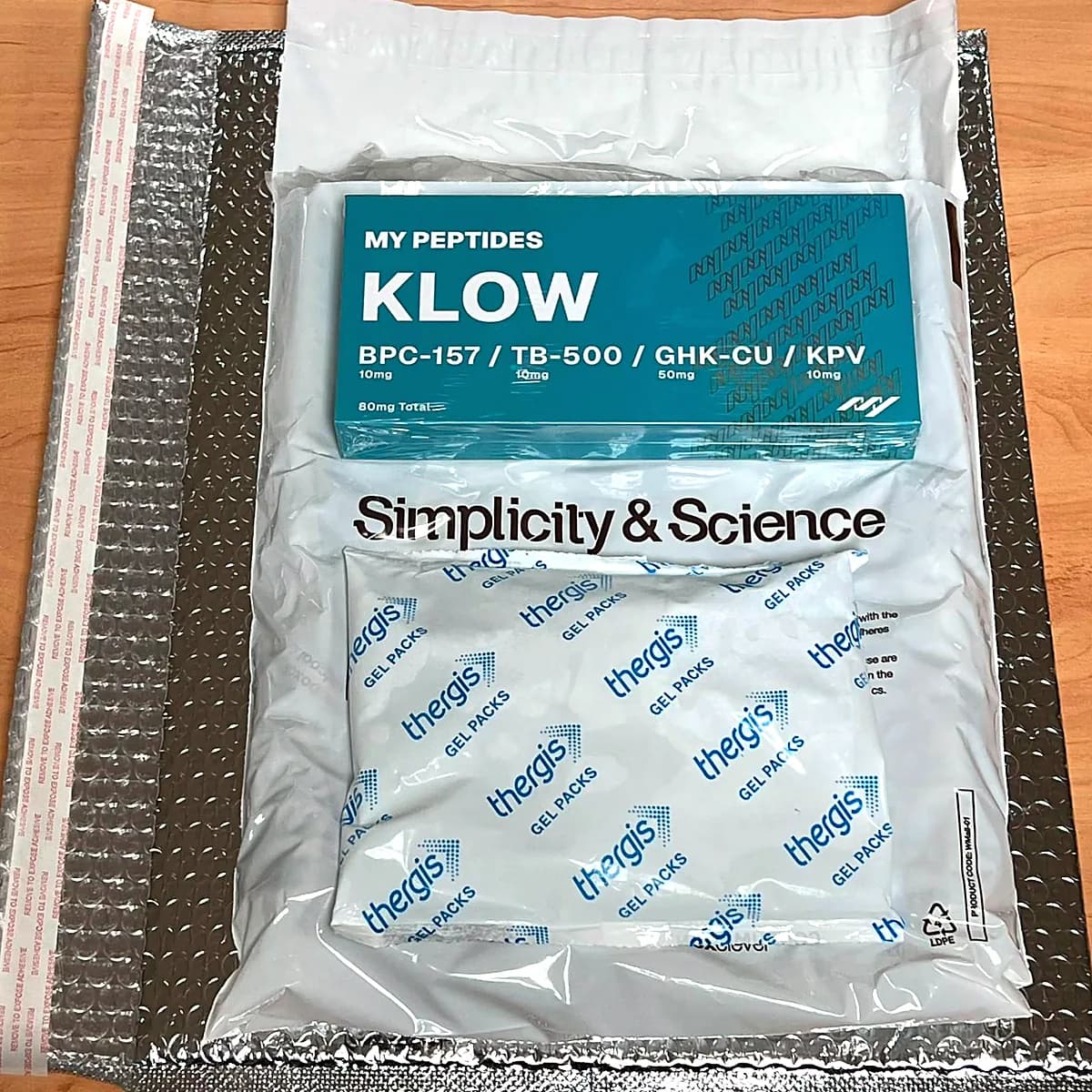
Chilled
Vials travel with frozen gel packs inside a sealed foil pouch, which holds temperature for roughly seven days — far longer than the journey needs, so the cold chain has room to spare.
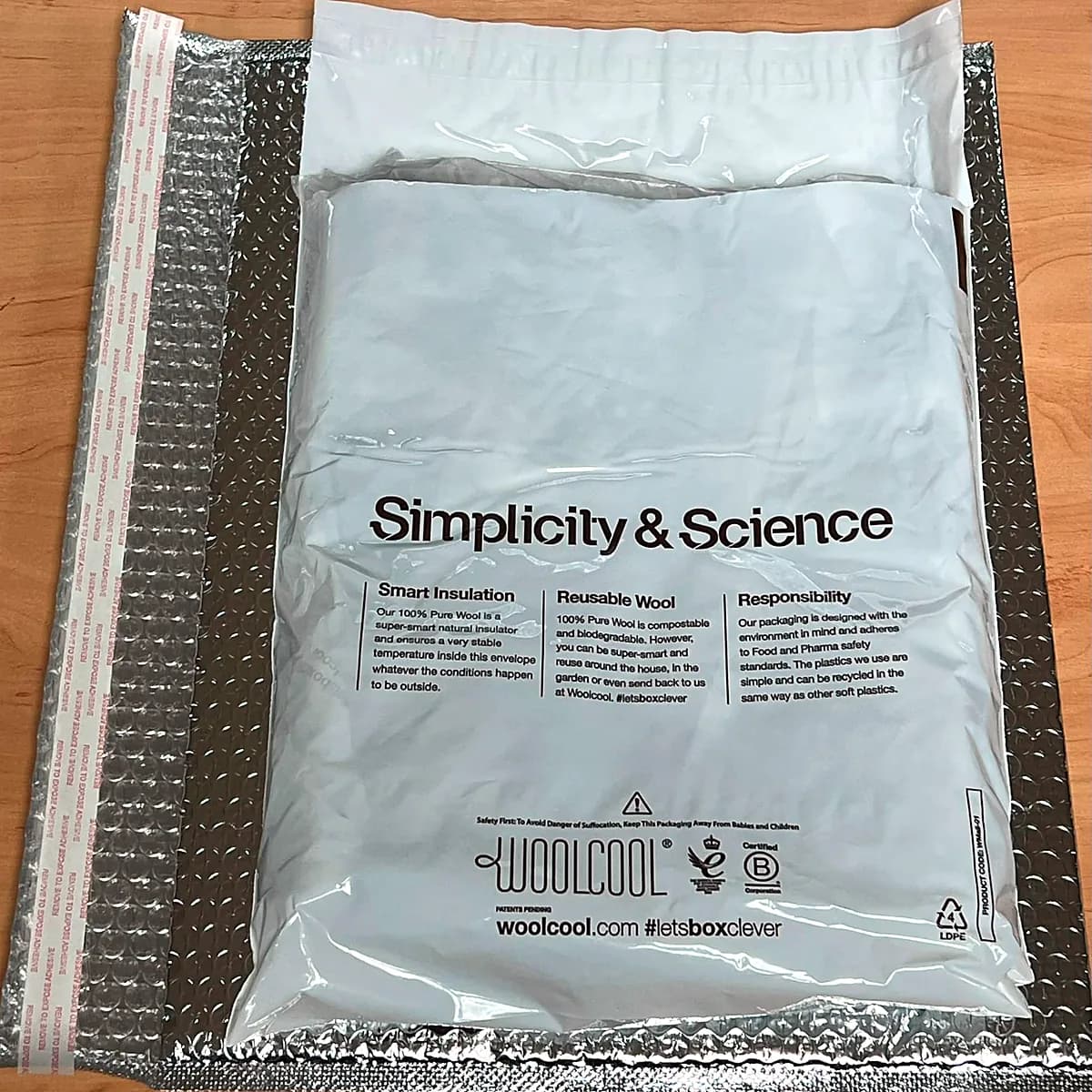
Insulated
The pouch sits inside a wool-lined envelope, so the cold chain survives a normal courier journey.
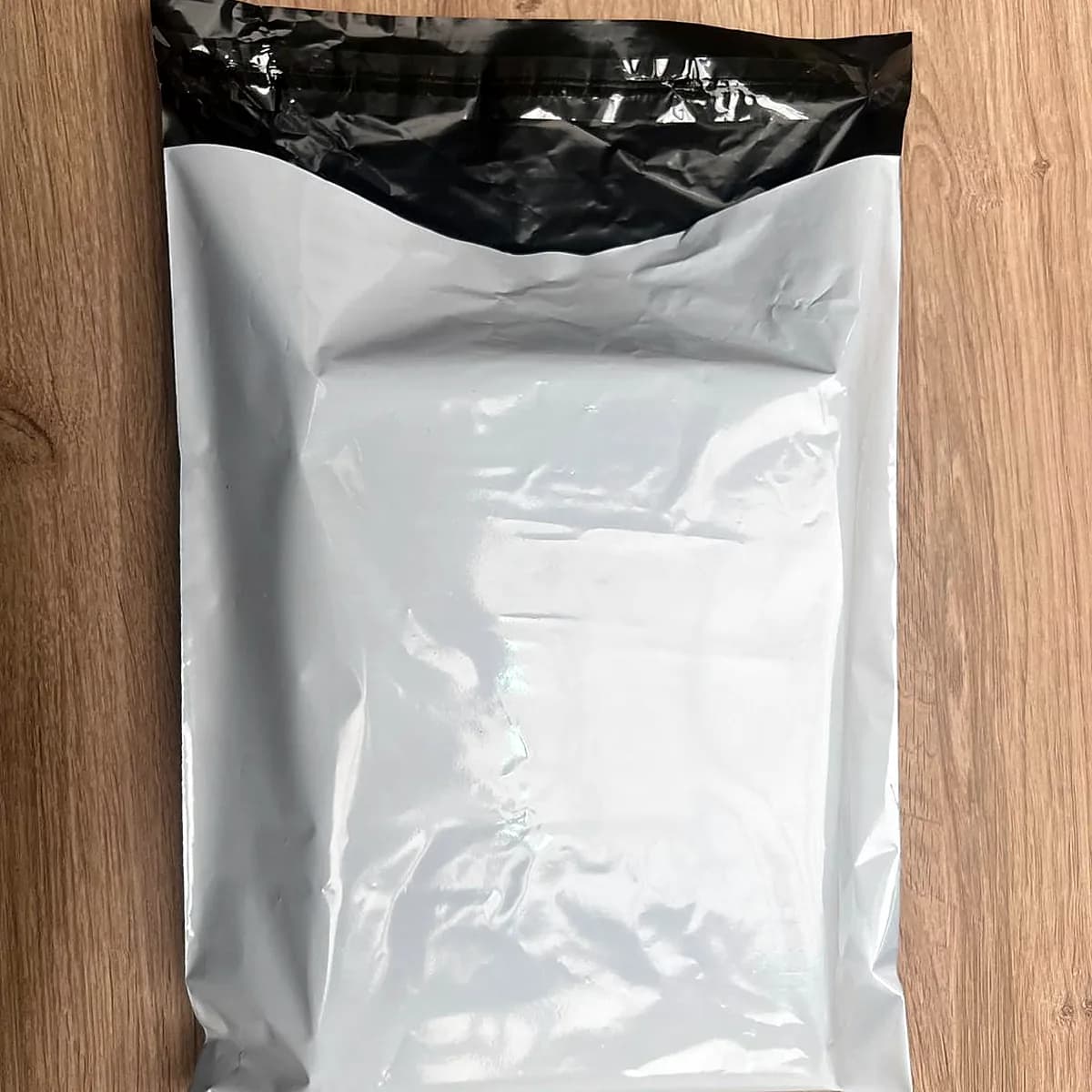
Discreet
Plain outer box with no branding and nothing on the label that names the contents.
Same-day dispatch
Order before the daily cut-off, Monday to Friday.
Free over $100
Tracked, next business day.
2–8 °C on arrival
Refrigerate as soon as the parcel lands.
BPC-157 and TB-500 Research Compound Set
$250.00 · Qty 1
BPC-157 + TB-500 set: composition, identity checks and format trade-offs for US laboratories
BPC-157 and TB-500 Research Compound Set — listed here as the "Wolverine Stack" — is a two-peptide research preparation that combines a synthetic pentadecapeptide (BPC-157) and a beta-thymosin fragment (TB-500) in equal proportion in a single 20mg vial, supplied ready-mixed in solution rather than as a lyophilized cake awaiting reconstitution. Material in this catalogue is synthesized in the UK.
${RUO_NOTE}
Two unrelated molecules sharing one vial
The pairing is a commercial convention, not a chemical relationship. BPC-157 is a 15-residue peptide, sequence GEPPPGKPADDAGLV, corresponding to a partial sequence of a protein identified in gastric juice; average mass is about 1,419 Da. It is unusually proline-rich — four prolines in fifteen residues — which constrains its backbone, and it contains no cysteine, so there is no disulfide to form, scramble, or misassign.
TB-500 belongs to a different family entirely. Thymosin beta-4 is a 43-residue protein of roughly 4.9 kDa. TB-500, as the name is used across catalogues, is a fragment built around the actin-binding motif LKKTETQ, not the intact protein — a distinction the name itself does not make explicit. The mass gap between fragment and full-length protein is several kilodaltons, so mass spectrometry settles the question immediately. Any supplier's identity data should tell you which molecule is actually in the vial.
The two also differ in net charge near neutral pH: BPC-157 carries a glutamate and two aspartates against a single lysine and reads net anionic, while the TB-500 fragment carries two lysines against one glutamate and reads net cationic. That opposition is useful rather than problematic — it is exactly what lets an analyst pull the two apart.
Analytical consequences a buyer should hold suppliers to
Because the components differ in both hydrophobicity and charge, reversed-phase HPLC and ion-exchange are both capable of resolving them. A co-formulated set should therefore be characterized as two peaks with a stated area ratio, not as a single purity figure. One number for a two-component preparation tells you nothing about whether the ratio in the vial matches the label.
A second point is easy to overlook: neither sequence contains tryptophan, tyrosine, or phenylalanine. Detection at 280 nm — a common default wavelength on UV setups — is effectively blind to both molecules. Purity chromatograms must be run near 214 nm, where the peptide bond itself absorbs. If a document shows a 280 nm trace for either compound, it is not evidence of anything.
Degradation chemistry follows from the same sequences. With no methionine and no cysteine in either component, oxidation and disulfide scrambling are not the leading failure routes. What is worth watching is aspartate chemistry in BPC-157 — it carries two adjacent aspartates, and Asp-containing sequences are prone to isomerization through a succinimide intermediate — and glutamine deamidation in the TB-500 fragment, which presents as a roughly +1 Da mass shift and often an extra shoulder on the main peak. Those are the signatures a stability-indicating method should be able to see.
Pre-mixed solution versus lyophilized powder
Peptide material reaches a bench in one of two formats: a lyophilized powder to be reconstituted, or a solution formulated at fill. The trade-offs run in both directions:
| Lyophilized powder | Pre-mixed solution | |
|---|---|---|
| Water activity | Very low; slows hydrolytic chemistry | Present from the outset |
| Preparation step | Requires a reconstitution step in the lab | None — composition is fixed at fill |
| Between-vial consistency | Depends on operator technique | Set at the point of formulation |
| Ratio in a multi-peptide set | Two reconstitutions, two chances to drift | Fixed at a single defined ratio |
| Transit exposure | Tolerant of ambient excursions | Time and temperature in transit matter |
| Analytical baseline | Purity of the dry solid | Solution-phase profile at fill |
A pre-configured format removes the variability that comes with preparing and combining solutions in-house, which is the whole point of a set like this one: the composition is standardized before it reaches the bench. The cost is that a solution has no dry-state grace period, so the honest questions to put to any vendor of a liquid format are what the formulation medium is, what the fill date was, and what stability evidence sits behind the format. Short, unstructured peptides without oxidation-labile residues are among the better candidates for a solution presentation, but that is an argument for asking the question, not for skipping it.
Reading a Certificate of Analysis properly
Whoever you buy from, a Certificate of Analysis is only useful if you read past the headline percentage:
- Identity by mass spectrometry — observed mass against theoretical, for each component, not just one.
- Purity by RP-HPLC at ~214 nm, with the chromatogram attached rather than a bare number.
- Net peptide content as distinct from chromatographic purity. Purity says what fraction of the peptide is the right peptide; net content accounts for counterion and water, which are not peptide.
- Counterion identity — acetate and trifluoroacetate behave differently in downstream assays, and TFA carryover from purification is a known confounder in cell work.
- Batch traceability — a lot number that actually appears on the vial, an analysis date, and a named laboratory. An undated, unattributed document is decoration.
Our published documents for the compounds that have them are collected at /coa.
Storage and handling
Treat the material as you would any peptide in solution: cold, dark, sealed, and protected from repeated freeze–thaw cycling. Splitting the contents into small aliquots on receipt is the standard way to avoid warming a whole container repeatedly. Label aliquots with the lot number so any anomaly later can be traced back to a batch.
The published literature
Both molecules sit behind a body of in-vitro and animal laboratory research under examination, concerned in part with cell migration and cytoskeletal behavior in model systems. It is a body of research under investigation, not a set of established findings, and no conclusions are drawn from it here.
BPC-157 and TB-500 (a thymosin beta-4 fragment) both appear on the WADA Prohibited List.
Related listings
The components are also catalogued individually as BPC-157 and TB-500. Other pre-configured multi-peptide sets in this range include the Glow Stack and the KLOW Stack, which are built on entirely different compounds and are not substitutes for this one.
Wolverine Stack: research FAQs
- What is the Wolverine Stack?
- The Wolverine Stack is a dual-peptide research set containing BPC-157 (10 mg) and TB-500 (10 mg), for 20 mg total, supplied as two separately verified vials. BPC-157 is a synthetic pentadecapeptide, while TB-500 is a peptide fragment derived from the thymosin beta-4 family. It is provided in a pre-configured laboratory format for in-vitro research use only, not for human or veterinary use.
- What is the Wolverine Stack studied for in research?
- In preclinical and in-vitro settings, the combined set has been used to examine dual-peptide interactions, signalling behaviour and structural responses within controlled experimental models. BPC-157 features in peptide-mediated signalling and cellular-response studies, while TB-500 is commonly investigated in relation to actin dynamics and cytoskeletal organisation. These are laboratory research observations only and do not represent established effects in humans or animals.
- Is the Wolverine Stack legal to buy?
- The Wolverine Stack is supplied strictly for in-vitro laboratory research use only. It is not a licensed medicine and is not authorised or sold for human or veterinary use or consumption. Every order is labelled for laboratory research use only, and it is the purchaser's responsibility to ensure their intended research use complies with all applicable laws and regulations.
- What purity is your Wolverine Stack, and is it lab-tested?
- Each peptide in the stack is verified to 99%+ purity by HPLC analysis. The figure printed on each batch's Certificate of Analysis reflects the purity value recorded in the laboratory for that specific batch. The compounds are synthesised and dispatched from our own UK facility.
- Does the Wolverine Stack come with a Certificate of Analysis?
- Yes, a batch-specific Certificate of Analysis (COA) ships with every order. You can also view sample COAs in our COA library before purchasing. The COA records the HPLC-verified purity and identity data for that specific batch.
- What compounds are in the Wolverine Stack, and why are they grouped together for research?
- The set contains two peptides, BPC-157 and TB-500, supplied together in a single pre-configured format. They are grouped as a research convenience, allowing researchers to work with a consistent, standardised composition and reducing variability associated with separate sample preparation in the laboratory. The grouping is a compound-set format only and makes no combined effect claim; both peptides are supplied for in-vitro laboratory research use only.
Research guides
Disclaimer: Products sold on this website are intended for research and laboratory use only. They are not intended for human or animal consumption. Purchasers must be at least 18 years of age. By using this site, you agree to our Terms & Conditions.