

Hulk Stack (CJC-1295 with DAC & Ipamorelin) | 20mg
Hulk Stack
Hulk Blend 20 mg is a multi‑peptide research formulation presented as a lyophilised vial for controlled analytical and in‑vitro experimentation. It contains two established research peptides — CJC‑1295 and Ipamorelin — enabling researchers to study combined peptide activity, cross‑pathway interactions, and receptor‑signalling behaviour within multi‑compound experimental systems. Each production batch undergoes internal purity verification to ensure suitability for regulated laboratory environments. The formulation brings together two peptides with complementary mechanistic profiles within the growth‑hormone (somatotropic) axis: CJC‑1295, a growth‑hormone‑releasing hormone (GHRH) analogue, for GHRH‑receptor signalling studies; and Ipamorelin, a selective growth‑hormone secretagogue, for ghrelin/GHS‑receptor pathway research. When used in combination, these compounds support exploration of convergent secretagogue signalling, receptor cross‑talk, and dual‑pathway regulatory responses under controlled laboratory conditions.
Total content
20mg
Purity
≥99% HPLC
COA
Included
- Same-day dispatch on orders placed before the daily cut-off.
- Free shipping over $100, tracked.
- Cold-chain packed: sealed foil pouch, ice packs, plain outer box.
- Batch-specific Certificate of Analysis included.
| Total content | 20mg |
| Presentation | Vial , Metal Pen , Needles |
| Purity | ≥99% (HPLC) |
| Storage | Must be kept in a refrigerator at 2°C–8°C for optimal potency. |
| Certificate of Analysis | Batch-specific COA included |
How we ship it
Every pre-mixed vial ships cold from the warehouse serving your region and arrives in a plain box. Refrigerate on arrival at 2–8 °C.
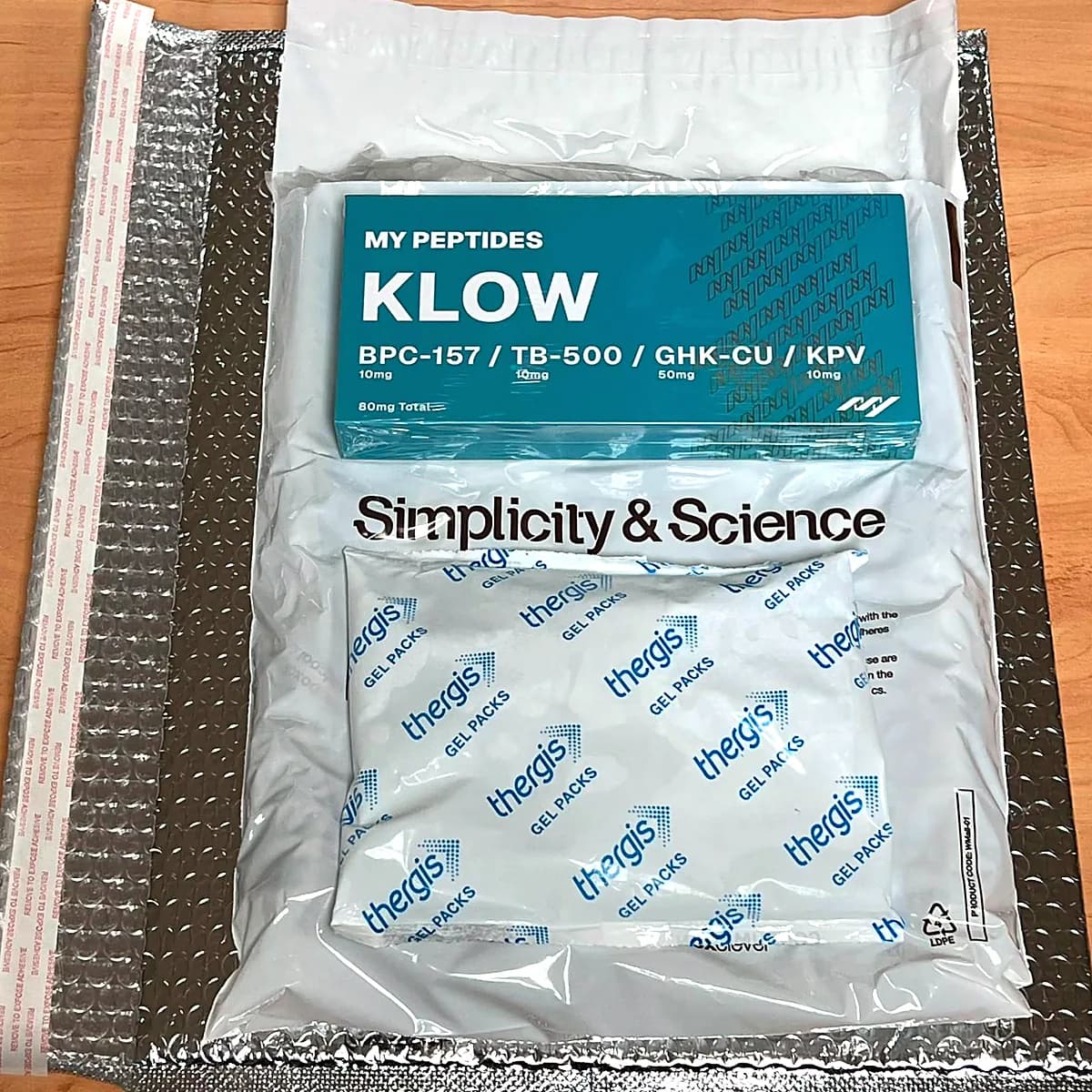
Chilled
Vials travel with frozen gel packs inside a sealed foil pouch, which holds temperature for roughly seven days — far longer than the journey needs, so the cold chain has room to spare.
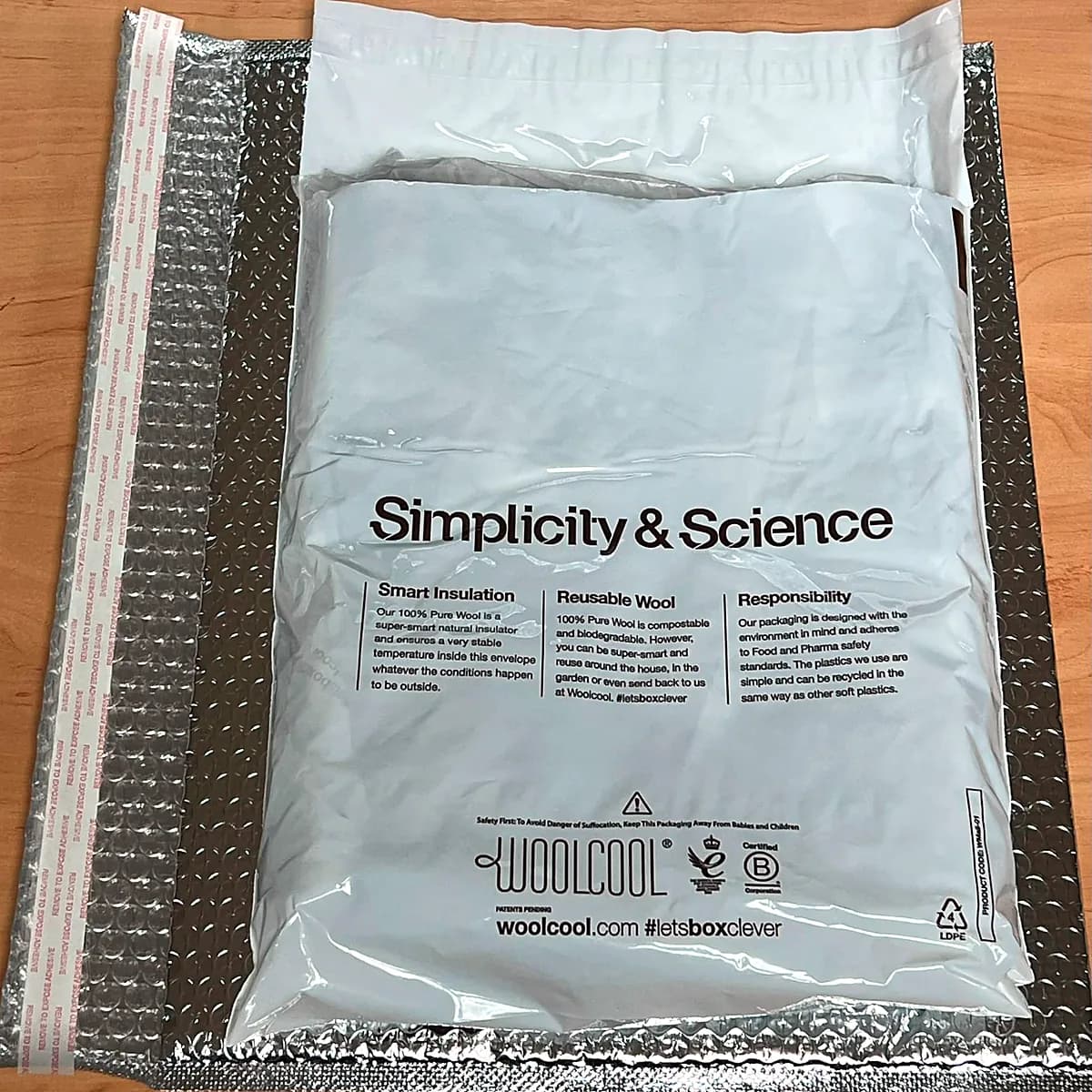
Insulated
The pouch sits inside a wool-lined envelope, so the cold chain survives a normal courier journey.
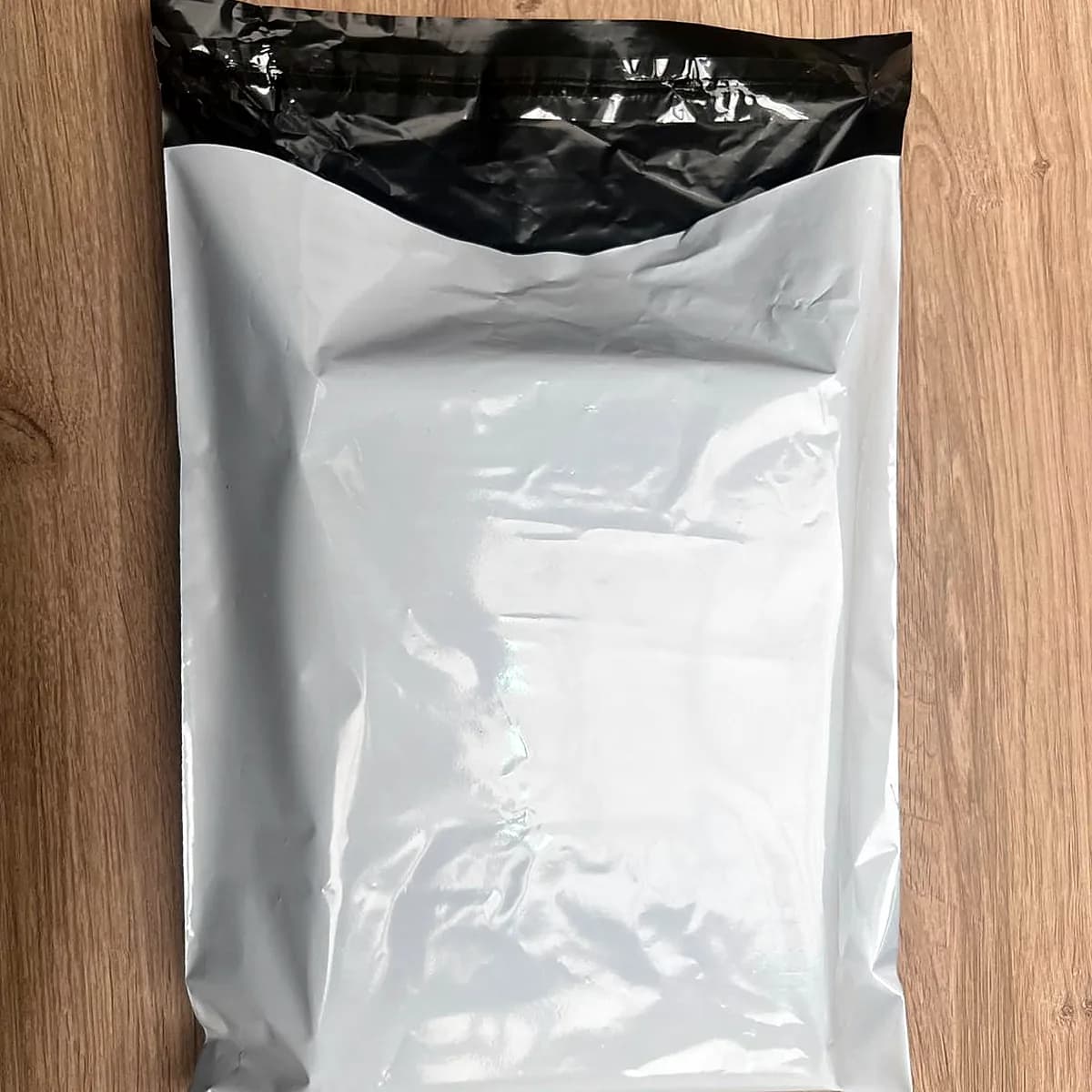
Discreet
Plain outer box with no branding and nothing on the label that names the contents.
Same-day dispatch
Order before the daily cut-off, Monday to Friday.
Free over $100
Tracked, next business day.
2–8 °C on arrival
Refrigerate as soon as the parcel lands.
Hulk Stack (CJC-1295 with DAC, & IPAMORELIN)
$250.00 · Qty 1
Hulk Stack (CJC-1295 with DAC & Ipamorelin): composition, blend analytics and buying criteria for US laboratories
Hulk Stack (CJC-1295 with DAC & Ipamorelin) is a two-component research blend supplied in a single vial at 20mg, pairing CJC-1295 with DAC — a 30-residue analog of growth-hormone-releasing hormone carrying a Drug Affinity Complex — with Ipamorelin, a five-residue selective agonist of the growth-hormone-secretagogue receptor.
${RUO_NOTE}
The two molecules, side by side
The reason this pairing is studied as a pair is structural, not commercial: the two peptides are chemically unrelated and are characterized against two different receptor families. One is a class B secretin-family GPCR ligand; the other is a small, heavily modified pentapeptide built against a class A GPCR. Almost nothing about their handling, analysis or stability profile is shared.
| CJC-1295 with DAC | Ipamorelin | |
|---|---|---|
| Class | GHRH (GRF) analog | GHS-R agonist pentapeptide |
| Chain length | 30 residues, C-terminal amide | 5 residues, C-terminal amide |
| Approx. average mass | ≈3,647 Da | ≈712 Da |
| Key structure | Tetrasubstituted GRF(1-29) backbone (D-Ala², Gln⁸, Ala¹⁵, Leu²⁷) plus a maleimidopropionyl group on the Lys³⁰ side chain | Aib–His–D-2-Nal–D-Phe–Lys-NH₂ |
| Unusual residues | One D-amino acid, D-Ala², which blocks the principal protease (DPP-4) cleavage site; the other three substitutions suppress chemical degradation routes | Two D-amino acids, one α-aminoisobutyric acid, one 2-naphthylalanine |
| Receptor family in the literature | GHRH receptor (class B GPCR) | GHS-R1a (class A GPCR) |
The four backbone substitutions in CJC-1295 are what distinguish it from native GRF(1-29), and they do different jobs: D-Ala² closes the DPP-4 cleavage site, Gln⁸ removes an asparagine deamidation site, Ala¹⁵ is a potency and stability substitution, and Leu²⁷ removes an oxidation-prone methionine. The DAC is a separate, appended chemistry. Ipamorelin's unnatural residues are what make it a difficult synthesis and an easy compound to get subtly wrong — D-2-naphthylalanine and Aib are expensive building blocks, and epimerization at the D-residues and truncation at the hindered couplings are the impurity classes an analytical method for this component has to be able to resolve.
The DAC group is the part that drives your analytics
The Drug Affinity Complex is a maleimide, appended as a maleimidopropionyl group on the Lys³⁰ side chain. Maleimides are thiol-reactive: the designed reaction is a Michael addition across the ring double bond to a free sulfhydryl, forming a covalent thioether. That conjugation chemistry is the reason the group is there, so the buyer's question is whether the reactive handle is still intact in the vial.
The complication is that maleimides are hydrolytically labile. Ring opening to the maleamic acid adds roughly 18 Da and destroys the thiol-reactive handle without changing the peptide's appearance at all. Rate of ring opening rises with pH and with time in aqueous solution.
That single fact should shape how you read a certificate for this blend. A mass spectrum that resolves the intact species from a +18 Da shoulder is worth more than a purity percentage on its own, and it is a fair question to put to any supplier. It is also why format is a live analytical question for this blend rather than a matter of preference.
What a certificate for a blend has to prove
A blend is not one product with one number. Single-analyte documentation — one chromatogram, one "99.1%" line — cannot characterize a two-peptide vial. Ask for, or check for:
- Two resolved identity peaks. With a ≈2,935 Da mass gap and very different hydrophobicity, RP-HPLC and ESI-MS separate these two trivially. There is no technical excuse for a merged result.
- Per-component purity, each expressed against its own peak area, plus named impurities where they are quantified.
- Mass confirmation for both, ideally deconvoluted, showing the intact CJC-1295 with DAC species and the ipamorelin monoisotopic cluster.
- Content and ratio. The listing's 20mg figure should be read carefully — establish whether it describes total peptide content or per-component content, and whether net peptide content is corrected for counterion and water.
- Counterion and water. Synthesis peptides are commonly isolated as TFA or acetate salts. Residual TFA is cytotoxic in some in-vitro systems at levels that are otherwise unremarkable, so if your assay is cell-based, the salt form is a real experimental variable. Karl Fischer water content closes the mass balance.
- Lot traceability. The lot on the certificate must match the lot on the vial. A certificate for a different batch is a marketing document.
Our documentation library is at /coa.
Format: solution versus lyophilized powder
This is the genuine fork in the road for a US buyer, and both formats are supplied for blends of this type. Check the format stated on this listing before you order — do not assume either. The trade-offs are real in both directions.
| Lyophilized powder | Pre-mixed solution | |
|---|---|---|
| Chemical stability | Hydrolysis of the maleimide is arrested in the dry state | Aqueous environment; maleimide ring opening and deamidation proceed slowly and continuously |
| Transit tolerance | Robust; brief ambient excursions are usually inconsequential, though the solid is hygroscopic so seal integrity becomes the thing that matters | Temperature-sensitive in transit, but US orders ship domestically from our US warehouse and arrive ready, with no preparation step |
| Operator error | A solvent-addition step in the lab introduces volumetric and mixing error | No preparation step, so no operator-introduced variance |
| Content verification | Mass in the vial is what the certificate states; the working concentration depends on the solvent volume you add | Concentration is fixed at fill and stated; it can drift with evaporation or adsorption over time |
| Repeat sampling | Repeated septum entry and freeze–thaw cycling apply once reconstituted | Repeated septum entry and freeze–thaw cycling apply from receipt |
Neither column is the safe default. The powder trades a preparation step against better shelf chemistry; the solution trades shelf chemistry against removing that step. Which trade suits you depends on your storage capability and on how the vial will be sampled — so read the format on the listing and match it to the bench.
Storage and handling
Keep sealed vials cold and dark; peptides with aromatic and imidazole side chains are photosensitive. Thermal cycling of any kind is a bigger practical threat to a blend than absolute storage temperature, because the two components do not degrade at the same rate — a cycled vial can drift in ratio while still looking clean by eye. Whatever format arrives, work in single-use portions for anything longitudinal. At low working concentrations, expect adsorptive loss to glass and untreated polypropylene, which is a common and under-diagnosed source of apparent potency loss in comparative work.
Origin and testing
This material is synthesized in the UK and verified in US laboratories. Beyond that, verification is your own responsibility as the buyer: retain the certificate against the lot you actually received, and record the receipt condition of the shipment — for any cold-sensitive format, the transit record is part of the data.
Published literature
Both compound classes are the subject of an ongoing body of in-vitro and animal laboratory research under examination, covering receptor binding, selectivity and analytical characterization. Nothing on this page draws conclusions from it.
For anyone operating under anti-doping rules: growth hormone secretagogues, including GHRH analogs and GHS-R agonists, appear on the WADA Prohibited List under class S2.
Related research blends
Other multi-component vials in the catalogue, each with a different component set and its own analytical considerations: Glow Stack, KLOW Stack, Wolverine Stack.
Hulk Stack: research FAQs
- What is the Hulk Stack?
- The Hulk Stack is a dual-peptide research set pairing CJC-1295 with DAC and Ipamorelin, at 20mg total. Both act within the growth-hormone (somatotropic) axis but through different receptors, which is why they are studied together. It is supplied strictly for in-vitro laboratory research use only.
- Does the Hulk Stack use CJC-1295 with DAC or without?
- With DAC. This is a different variant from the CJC-1295 sold as a single on this site, which is the No-DAC form (also called Mod GRF 1-29). DAC is a drug-affinity complex that binds serum albumin, and the two variants show different pharmacokinetic behaviour in experimental models — so the distinction matters when designing a study.
- Why are CJC-1295 and Ipamorelin studied together?
- They engage distinct receptors on the same pituitary cells. CJC-1295 is a GHRH analogue that activates the GHRH receptor, while Ipamorelin is a selective agonist at the ghrelin / GH-secretagogue receptor (GHSR-1a). Examining both within one experimental system lets researchers compare convergent versus independent signalling. These are in-vitro and preclinical observations only, and the grouping makes no combined-effect claim.
- Is the Hulk Stack legal to buy?
- The compounds in the Hulk Stack are legal to purchase and possess for laboratory research purposes. They are not licensed medicines and cannot be sold for human or veterinary consumption. Every order ships labelled for in-vitro research use only.
- What purity is the Hulk Stack, and is it lab-tested?
- Each peptide is verified to 99%+ purity by HPLC analysis. The figure printed on the batch Certificate of Analysis is the value recorded in the laboratory for that specific batch, not a generic marketing claim.
- How is the Hulk Stack supplied, stored and handled for research?
- The set is supplied in sealed vials and shipped cold-chain. Refrigerate at 2°C–8°C as indicated on the label, keep vials sealed and away from light, and check the batch Certificate of Analysis supplied with your order for the recorded appearance and presentation. Handling should follow standard aseptic laboratory practice.
Research guides
Disclaimer: Products sold on this website are intended for research and laboratory use only. They are not intended for human or animal consumption. Purchasers must be at least 18 years of age. By using this site, you agree to our Terms & Conditions.